

A dull ache in your knee can feel like a small annoyance—until it suddenly keeps you from kneeling in the garden, walking the dog, or playing with grandkids. Yet many people shrug knee pain off as “getting older.” The truth is that untreated knee arthritis can quietly wear down joint cartilage for years before you know it.
In this guide, you’ll discover the common and not-so-common reasons knees hurt, the earliest knee arthritis symptoms, simple tests doctors use to diagnose trouble, and proven paths to lasting relief from knee arthritis pain.
What Causes Knee Pain: Arthritis vs Other Issues
Osteoarthritis (OA) is responsible for about one in three cases of chronic knee pain in adults over 45. Knee arthritis develops when the smooth articular cartilage that cushions the thigh bone (femur) and shinbone (tibia) thins out. Tiny bone spurs form and inflammation irritates nerves each time you step. Risk rises with age, past sports injuries, genetic traits, and excess body weight.
Other types of arthritis include:
- Rheumatoid arthritis (RA): An autoimmune process inflames the synovial lining, often attacking both knees at once.
- Psoriatic arthritis: Linked to psoriasis skin patches, it can strike asymmetrically and cause tendon pain.
- Post-traumatic arthritis: A major ligament tear or fracture can trigger the early onset of OA years later.
Non-Arthritic Structural Problems
Not all knee pain equals arthritis. Injuries and overuse problems can mimic knee pain from arthritis, yet follow different patterns:
| Condition | How It Starts | Pain Clues | Typical Patient |
| Meniscus tear | Sudden twist or squat | Sharp medial or lateral stab, catching | Athletes, movers |
| Patellar tendinopathy | Repetitive jumping | Pain just below the kneecap when landing | Runners, jumpers |
| Bursitis | Repeated kneeling | Swelling on the front of the knee, warm to touch | Gardeners, trades |
For example, OA pain builds slowly, stiffens in the morning, and eases once you start moving. A torn ligament or inflamed bursa usually hurts right away and feels unstable or warm.
Early Signs of Knee Arthritis
Spotting symptoms of knee arthritis early allows lifestyle changes that can slow damage.
Look for the following:
- Morning stiffness under 30 minutes.
- Deep, aching pain centered inside the joint, not on the skin.
- A crackle or crunch when you bend or straighten the leg. This is called Crepitus.
- Swelling after activity. Fluid builds because roughened cartilage releases debris that irritates the synovium.
- “Start-up pain.” A knife-like jab when rising from a chair that fades after a few steps.
- Loss of motion. You can’t fully straighten your leg or tuck your heel under a chair.
You may notice signs before your X-rays look abnormal, proving why attention to early knee arthritis symptoms is key.
Risk factors you can change
- Losing body weight can take the stress off your knees.
- Weak quadriceps or thigh muscles can increase stress on cartilage. Using resistance bands or doing chair squats can help strengthen these muscles.
- Cartilage needs motion to absorb nutrients. Gentle movement helps nourish the joint.
Risk factors you can’t change
- Age over 50
- Female sex (post-menopausal hormonal changes affect cartilage)
- Family history of OA or bowed-leg alignment
Knowing your personal risk helps you act sooner.
When to See a Doctor for Knee Pain
Self-care works for occasional soreness, but certain red flags demand medical evaluation within a week:
- Swelling that does not shrink with rest and ice.
- Knee buckling or the sensation that it will “give way.”
- Night pain that is bad enough to wake you is often a sign of bone-on-bone disease.
- Fever, redness, or warmth, which could signal infection or gout.
- New leg swelling below the knee.
If you already know you have OA but pain surges after a twist or stumble, a meniscus tear or loose cartilage chip might be the cause.
Diagnostic Tests for Knee Arthritis
History and Physical Exam
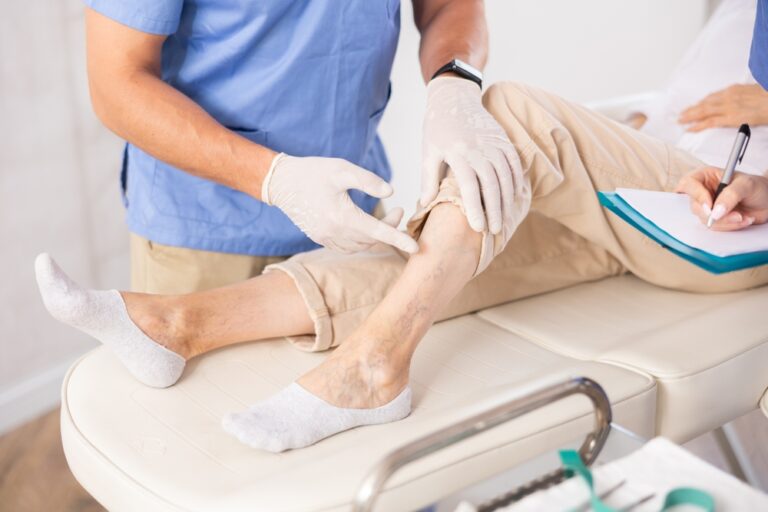
Your provider will ask when the pain started, what activities make the symptoms worse or better, and any prior injuries you may have had. They will feel for joint-line tenderness, test ligaments, and measure range of motion.
Imaging
| Tool | What It Shows | Why It Matters |
| X-ray | Joint space narrowing, bone spurs, alignment | First-line confirmation of OA severity |
| Ultrasound | Effusions, synovitis, cysts | Quick, radiation-free, guides injections |
| MRI | Early cartilage thinning, meniscus quality, and bone bruises | Reserved for unclear cases or surgery planning |
Laboratory Studies
- Blood tests: Erythrocyte sedimentation rate, C-reactive protein, rheumatoid factor to rule out inflammatory arthritis.
- Synovial fluid analysis: A quick needle sample can detect gout crystals or infection.
Together, these tools distinguish what causes arthritis in the knee from injuries or rare metabolic conditions.
Managing Arthritis-Related Knee Pain
No single treatment fixes OA, but layering strategies creates powerful “relief from knee arthritis pain.” Think of it as a menu. Start with the basics and add stronger items as needed.
Lifestyle Modifications
Weight management: Losing even small amounts of weight can significantly reduce knee pain and slow arthritis progression.
Low-impact exercise: Stationary cycling, water aerobics, tai chi, and walking can help with pain relief.
Joint protection: Soft-soled shoes, an elastic knee sleeve for long walks, or walking poles on hikes reduce joint reaction forces.
Targeted Physical Therapy
A licensed therapist tailors:
- Quadriceps and hip strengthening to unload the knee.
- Balance practice to prevent falls and protect cartilage.
Medications and Supplements
Here is a list of medications and supplements that can help with arthritis knee pain:
| Option | How It Helps | Key Tips |
| Topical NSAIDs (diclofenac gel) | Mild-to-moderate pain relief without stomach risks | Apply up to 4 times per day |
| Oral NSAIDs | Reduce inflammation and pain | Take the lowest effective dose, with food |
| Acetaminophen | Alters pain perception, not inflammation | Stay under 4,000 mg/day |
| Turmeric (curcumin) | Modest anti-inflammatory effect | Choose a product with black pepper extract to boost absorption |
| Glucosamine/Chondroitin | Supports cartilage repair | Discuss with provider if tried >3 months |
If you’re not sure, ask your provider to help.
Image-Guided Joint Injections
- Corticosteroids: Calm flare-ups for four to 12 weeks.
- Hyaluronic acid (“gel shots”): Provide lubrication, with benefits lasting up to six months in some patients.
- Platelet-rich plasma (PRP): Delivers growth factors; evidence is growing but still variable.
Genicular artery embolization (GAE)
Genicular artery embolization (GAE) is a minimally invasive outpatient procedure that relieves chronic knee pain from arthritis, without surgery. A board-certified vascular surgeon uses advanced imaging to guide a tiny catheter through the leg arteries to the genicular arteries in the knee. Tiny particles are then delivered through the catheter to block abnormal blood vessels, reducing inflammation and pain at the source.
Most patients experience relief lasting three to four years, with no general anesthesia, large incisions, or hospital stay required. GAE helps avoid the risks and long recovery of knee replacement, and is covered by Medicare, IEHP, and many insurance plans.
Surgical Solutions
When cartilage is fully worn and daily life suffers, orthopedic surgeons may suggest:
- Osteotomy: Cutting and realigning bone in younger, active patients with one-sided wear.
- Partial knee replacement: Swaps only the damaged compartment.
- Total knee replacement: Modern robotic navigation has improved alignment accuracy and shorter hospital stays.
Living with knee pain from arthritis doesn’t mean giving up what you love. With the right diagnosis and care, most people stay active and fulfilled.
At Empire Vein & Vascular Associates, we’re ready to pinpoint the cause of your knee pain and craft an effective path to relief.
Visit our website or call us at 1-800-KNEE CARE to schedule your comprehensive vascular evaluation.