


What is peripheral artery disease?
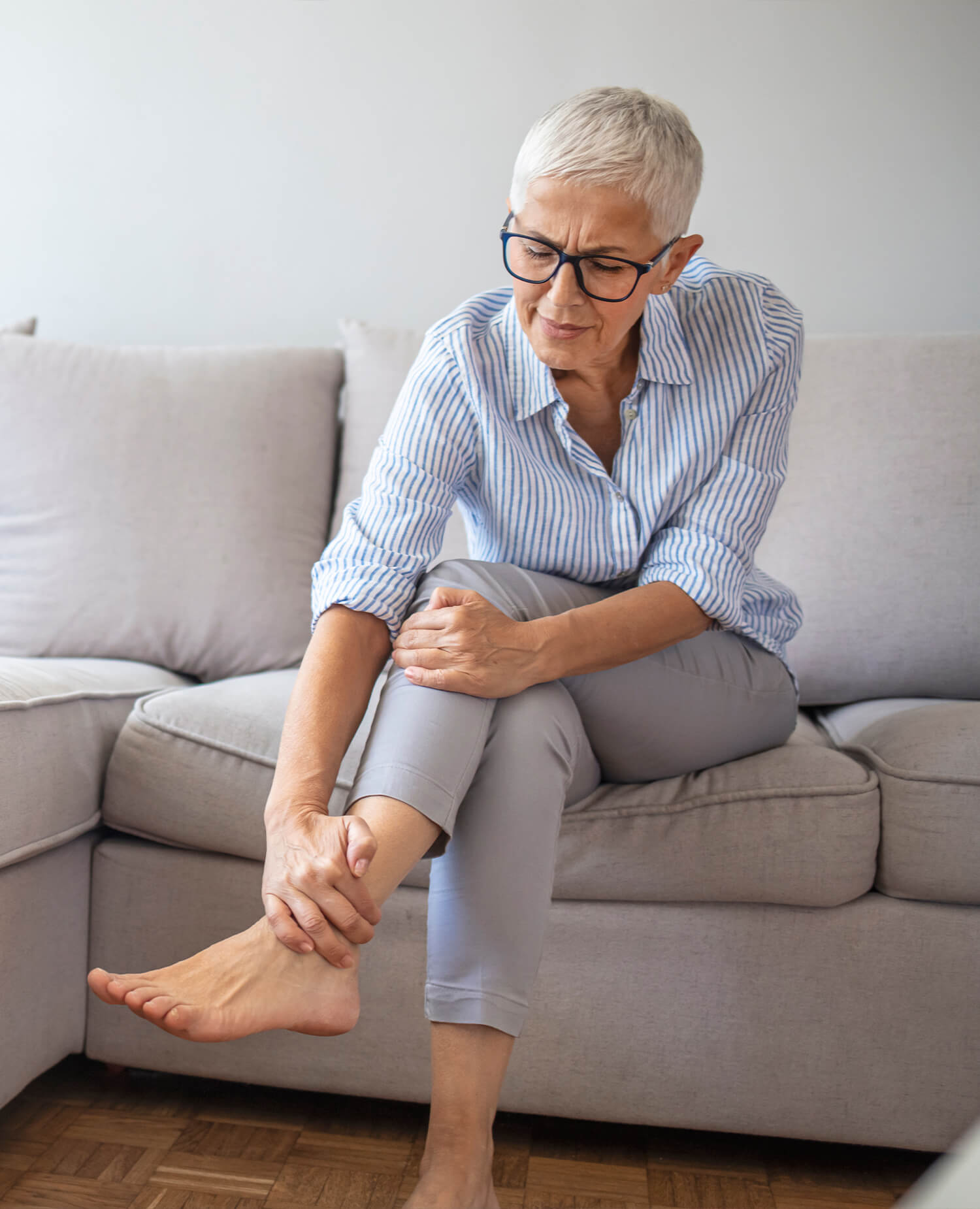
Peripheral artery disease, or PAD, is a common circulation problem in which the arteries that carry blood to your legs and feet become narrowed by plaque. With less blood getting through, the muscles don't get the oxygen they need, especially when you're active.
It's caused by atherosclerosis: the same process that narrows the arteries of the heart.
Often felt while walking
A whole-body signal
Manageable, not hopeless

Signs & symptoms
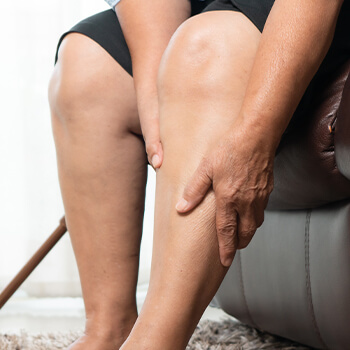
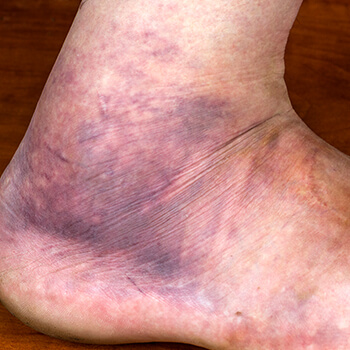
PAD can be quiet for years. When it does show up, there are three ways to catch it: by how your legs feel, what you see, and the patterns you notice.
What you Feel
What you See
What you Notice
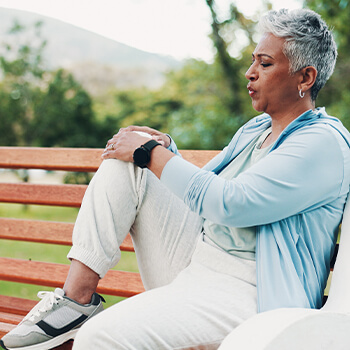
Up to 4 in 10 people with PAD don't have the classic leg cramping. That's why people with diabetes or a history of smoking benefit from screening even without obvious symptoms.
What causes PAD
Nearly always, it comes down to plaque slowly narrowing the arteries that feed your legs.
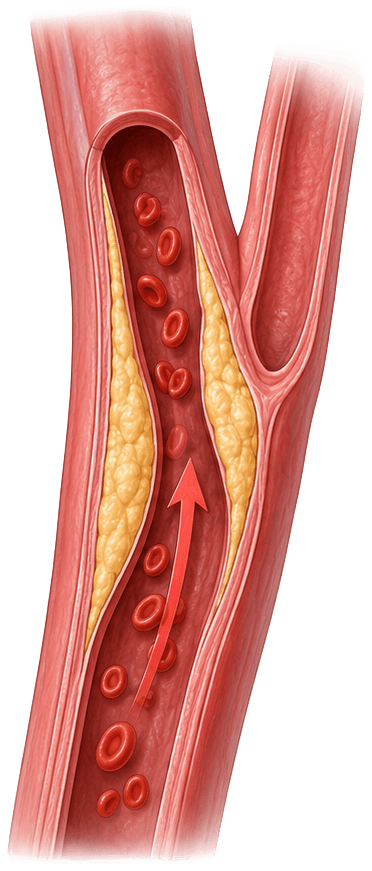
Plaque builds up
Fatty deposits, cholesterol, and calcium gradually collect along the inner walls of the arteries that carry blood to your legs, a process called atherosclerosis.
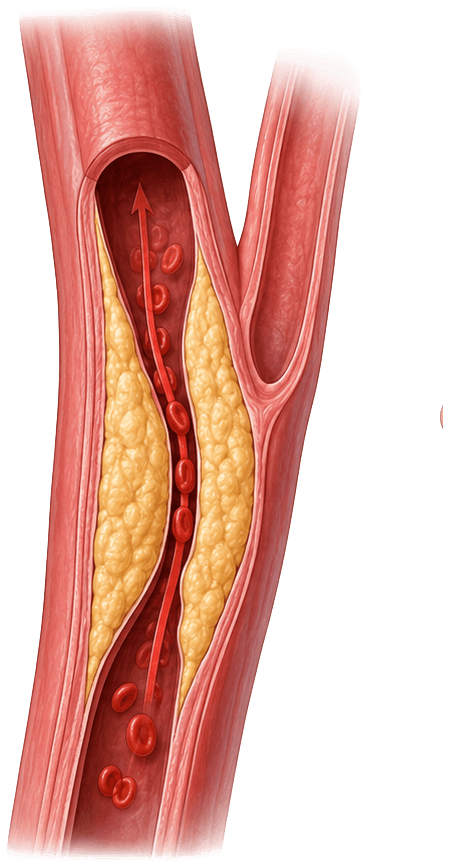
Arteries narrow
As plaque thickens, the channel inside the artery shrinks and stiffens, so less oxygen-rich blood reaches the muscles of the legs and feet.
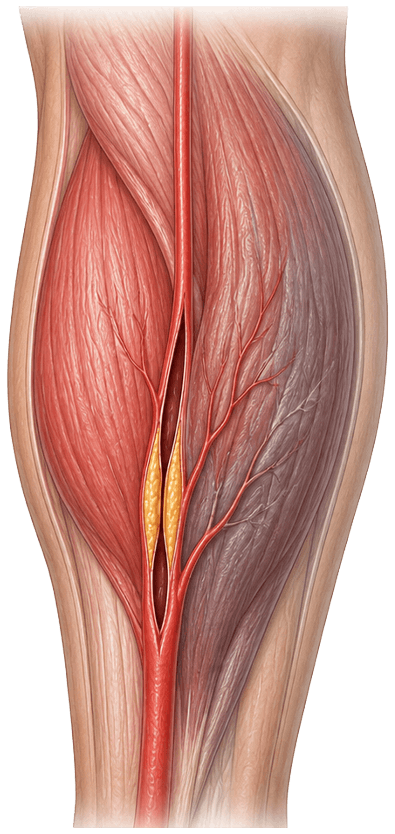
Muscles starve for oxygen
When you walk, the leg muscles demand more blood than the narrowed artery can deliver, which is why they cramp, then ease once you rest.
Who's most at risk
PAD shares its risk factors with heart disease. Smoking and diabetes carry the most weight, but they rarely act alone, and the more that stack up, the higher your risk.
The same habits that lower PAD risk, like staying active and managing blood sugar and cholesterol, also protect your heart.
Smoking
Diabetes
Age over 50
High blood pressure & cholesterol
Family or personal history
Excess weight & inactivity
Why it shouldn't wait
PAD is treatable, but it progresses
Caught early, PAD is very manageable. Left alone, reduced blood flow can lead to serious problems in the leg and beyond.
Non-healing wounds
Critical limb ischemia
Heart attack & stroke
Loss of mobility
The good news
With today's minimally invasive treatments, the vast majority of PAD is managed successfully, and treating it protects your heart at the same time.
How we diagnose PAD
It starts simply, with quick, painless tests that tell us exactly how well blood is reaching your legs.
Vascular screening
A specialist reviews your symptoms and history, checks pulses in your legs and feet, and looks at the skin.
Ankle-Brachial Index (ABI)
A simple, painless test compares blood pressure at your ankle and arm to measure how well blood reaches your legs.
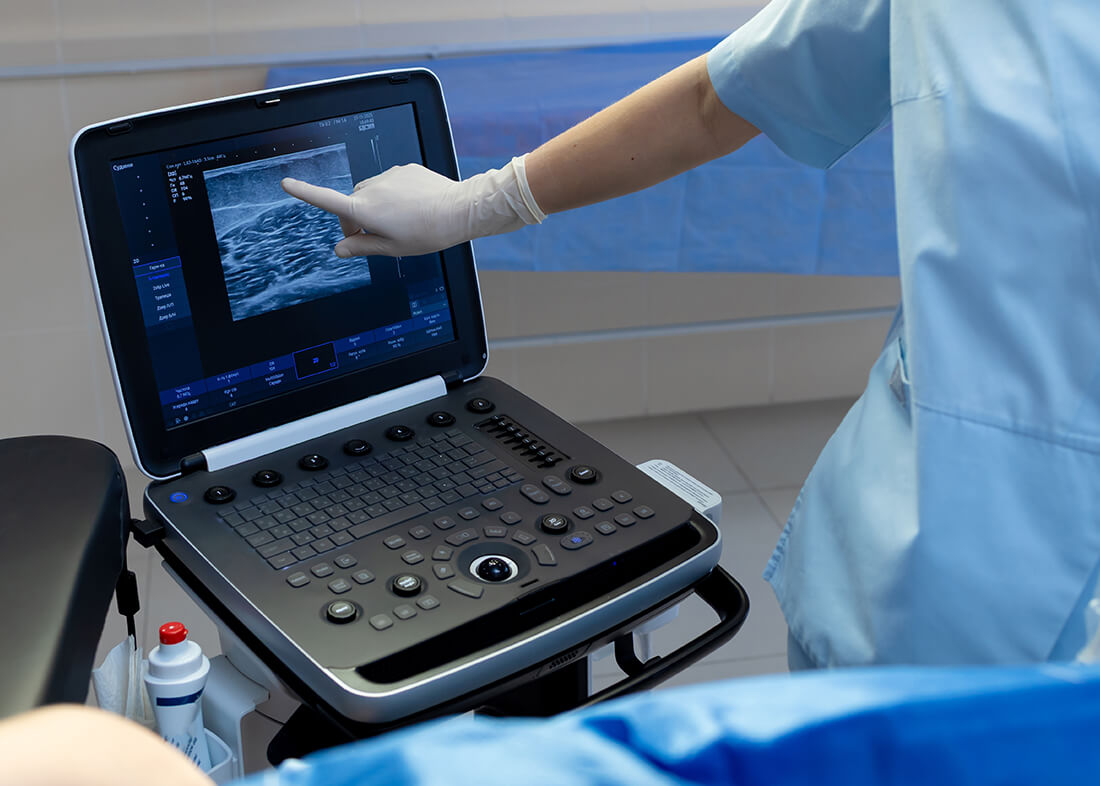
Duplex ultrasound
An imaging scan in our accredited vascular lab pinpoints exactly where and how severely an artery is narrowed.
How we treat PAD
Care starts with the simplest steps and adds minimally invasive procedures only when they're needed and matched to your arteries.
Lifestyle & supervised walking
A structured walking program, quitting smoking, and managing blood sugar and cholesterol can meaningfully improve how far you walk.
Medication management
Medicines to manage cholesterol, blood pressure, blood sugar, and clotting risk help slow PAD and protect the heart.
Atherectomy
A catheter-based procedure that shaves or sands hardened plaque from inside a narrowed leg artery to reopen blood flow.
Angioplasty & stenting
A tiny balloon widens the narrowed artery, and when needed a small stent holds it open, restoring circulation.
Intravascular Lithotripsy
Sound-wave energy gently cracks stubborn calcium in the artery wall so the vessel can be safely reopened.
Every plan is built around your test results and your goals. Your specialist will walk you through exactly what's recommended and why.
Peripheral artery disease, answered
The questions patients ask us most about PAD.
PAD reduces blood flow to the limbs. Left untreated, it can lead to non-healing wounds and, in severe cases, limb loss. Just as important, it's a warning sign that arteries elsewhere may be narrowing too, so people with PAD have a higher risk of heart attack and stroke. The reassuring part is that it's very treatable, especially when caught early.
The classic sign is called claudication: a cramping, aching, or tired feeling in the calves, thighs, or hips that comes on when you walk and predictably eases within a few minutes of resting. As PAD advances, some people also feel pain in the foot or toes even at rest, often worse at night.
PAD can't be fully reversed, but its progression can be slowed or stopped, and blood flow can often be dramatically improved. With lifestyle changes, the right medications, and minimally invasive procedures when needed, most patients can walk farther, feel better, and protect the limb.
Most PAD treatments today are minimally invasive and catheter-based, performed through a tiny pinhole rather than a large incision. Procedures like atherectomy, angioplasty, and stenting are typically outpatient with little downtime. Major open surgery is reserved for the most advanced cases.
It starts with a simple, painless test called the Ankle-Brachial Index (ABI), which compares blood pressure in your ankle to your arm. If needed, a duplex ultrasound in our accredited vascular lab maps exactly where an artery is narrowed, so your specialist can recommend the right plan.
In most cases, yes. Because PAD is a medical condition with real risks, testing and treatment are typically covered by insurance, including Medicare, when medically necessary. Coverage for a screening visit varies by plan, so we verify your benefits and explain any costs before anything is scheduled.
Insurance
When your veins cause symptoms like aching, swelling, or skin changes, treatment is typically considered medically necessary, including under Medicare. We'll help you verify your benefits.
Most major plans accepted




Locations
Care close to home across the Inland Empire, High Desert, and Coachella Valley. Every office has on-site ultrasound.
High Desert
Coachella Valley
Don't wait on your circulation.
A vascular screening today can protect your mobility and your heart. Quick, painless, and offered at all 6 of our Southern California offices.