




What is TCAR?
Carotid artery stenosis is a narrowing of the arteries that carry blood to your brain. TransCarotid Artery Revascularization (TCAR) is a minimally invasive procedure that treats it while minimizing the risk of stroke during treatment itself.
Traditional options include carotid endarterectomy (open neck surgery) and stenting through the groin. Both work, but they carry a risk of dislodging plaque that can travel to the brain. TCAR takes a smarter path: a small incision at the base of the neck, plus a system that temporarily reverses blood flow to protect the brain. It's a leading treatment for carotid artery disease.
It protects the brain
A small neck incision
Built for higher-risk patients

How it works
TCAR combines the best of surgery and minimally invasive technique, with the brain protected the whole time.
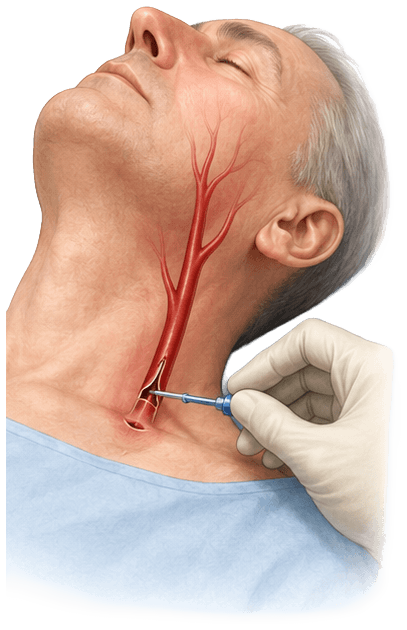
Access at the neck
You're kept comfortable with local anesthesia and light sedation instead of general anesthesia. Your surgeon makes a small incision at the base of the neck to reach the carotid artery.
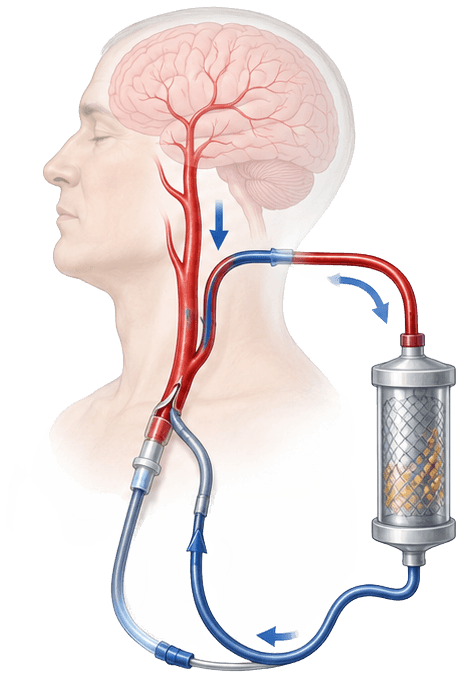
Blood flow is reversed
A flow-reversal system gently redirects blood away from the brain and through an external filter. Any plaque debris loosened during the procedure is caught before it can reach the brain.
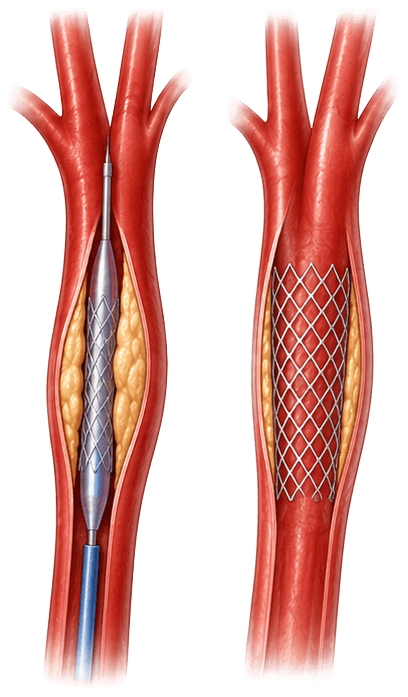
A stent is placed
Through the same small opening, your surgeon widens the narrowed artery and places a small stent to hold it open, restoring healthy blood flow to the brain.
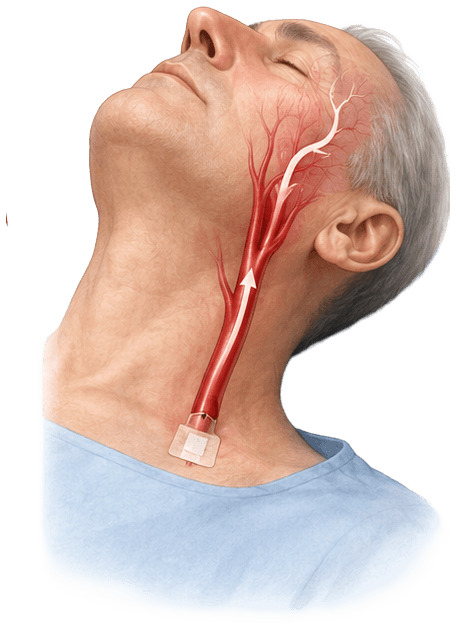
Recovery begins
Normal blood flow resumes and the incision is closed. The whole procedure takes 60–90 minutes, and most patients go home within a day or two.
Who's a candidate?
TCAR is especially valuable for people with significant carotid narrowing who are higher-risk for traditional open surgery.
TCAR may be right for you if you have
It's often chosen for higher-risk patients, including those with
Every candidate gets a full evaluation before we recommend TCAR: medical history, a physical exam, and imaging like carotid ultrasound, CT, or MR angiography.
Why patients choose it
For the right patient, TCAR offers real advantages over both open carotid surgery and traditional stenting.
Lower stroke risk during treatment
Minimally invasive
Faster recovery
A shorter procedure
Proven results
Easier on the heart
Why choose Empire Vein
The #1 provider of TCAR in California
Our fellowship-trained vascular specialists have performed more TCAR procedures than any other practice in the state. They build a customized plan around each patient, with clear communication every step of the way.

500+
carotid procedures performed by our surgeons
Top 5
most experienced TCAR teams in the country
20+ years
serving Southern California
4.8★
from 2,000+ verified patient reviews
TCAR, answered
The questions patients ask us most about the procedure.
For stroke risk during treatment, yes. TCAR's flow-reversal system protects the brain while the artery is being treated, which significantly lowers the risk of a procedure-related stroke compared to traditional carotid stenting.
Usually not. TCAR is typically performed under local anesthesia with light sedation, which puts less stress on the heart. That's one reason it's a good option for higher-risk patients.
The procedure usually takes 60 to 90 minutes, with a short hospital stay of one to two days. Most people return to their normal activities within about a week.
A carotid endarterectomy is open surgery that removes plaque through a larger incision in the neck. TCAR uses a much smaller incision plus a brain-protection system, so there's less tissue trauma, less nerve-injury risk, and a faster recovery.
TCAR is especially valuable for people with significant carotid narrowing who are considered higher-risk for open surgery. A full evaluation confirms whether it's right for you. That includes your history, an exam, and imaging like carotid ultrasound or CT/MR angiography.
Any carotid procedure carries some risk, including stroke, bleeding, nerve injury, and re-narrowing over time. TCAR targets the biggest of these: its flow-reversal system protects the brain during treatment, and the small incision carries less nerve-injury risk than open surgery. Your surgeon will walk through your personal risks before anything is decided.
In most cases, yes, including Medicare. We accept most insurance plans and verify your benefits before anything is scheduled.
Insurance
When your veins cause symptoms like aching, swelling, or skin changes, treatment is typically considered medically necessary, including under Medicare. We'll help you verify your benefits.
Most major plans accepted






Locations
Care close to home across the Inland Empire, High Desert, and Coachella Valley. Every office has on-site ultrasound.
High Desert
Coachella Valley
Protect your brain. Get ahead of stroke.
Talk with our vascular specialists about whether TCAR is right for you. Screening offered at all 6 of our Southern California offices.