



What is an abdominal aortic aneurysm?
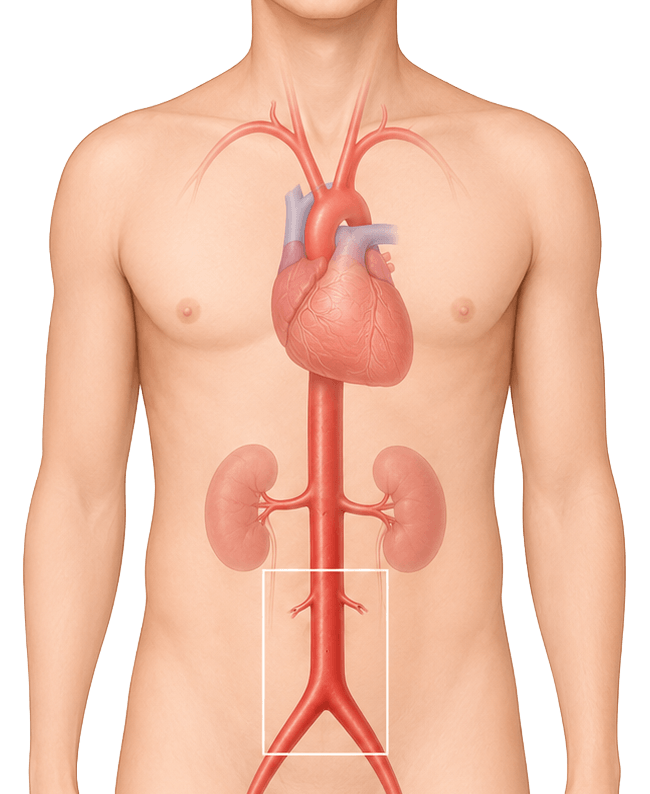
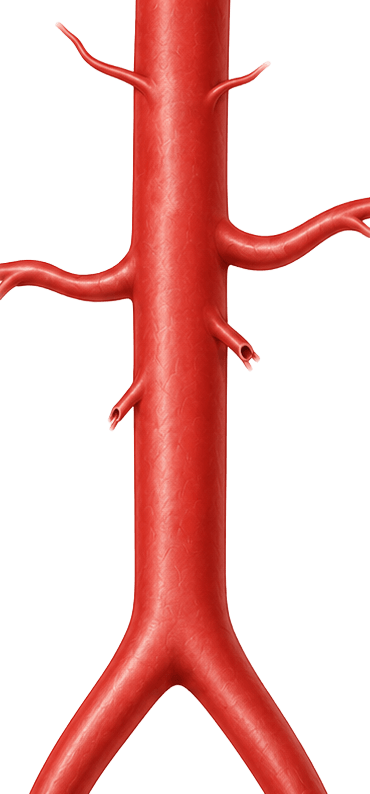
Your aorta is the largest artery in your body, carrying oxygen-rich blood from your heart down through your chest and abdomen. A healthy aorta is smooth, strong, and open.
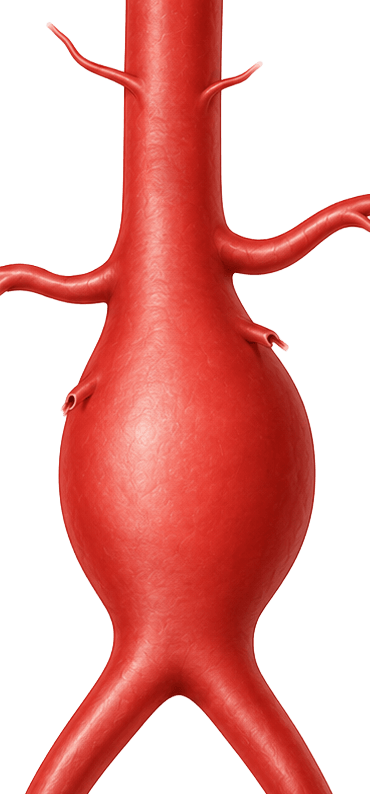
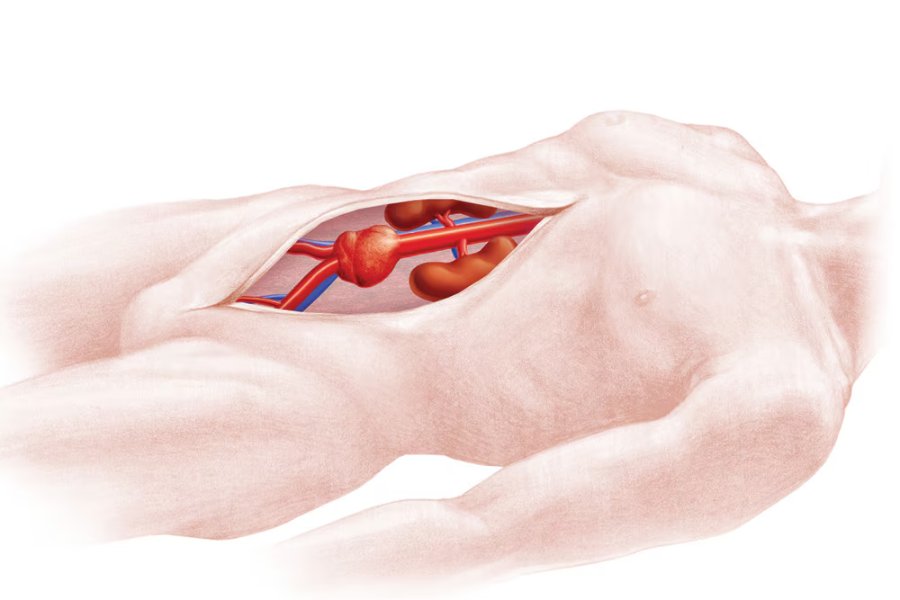
Over time, a section of the aortic wall can weaken and bulge outward like a balloon. That bulge is an aneurysm, and when it forms in the belly it's called an abdominal aortic aneurysm, or AAA. A large one can rupture and cause dangerous internal bleeding. That's why finding and watching an aneurysm early matters so much.

How it develops
An aneurysm forms slowly, as a weak spot in the aortic wall gives way to the pressure of blood flowing through it.
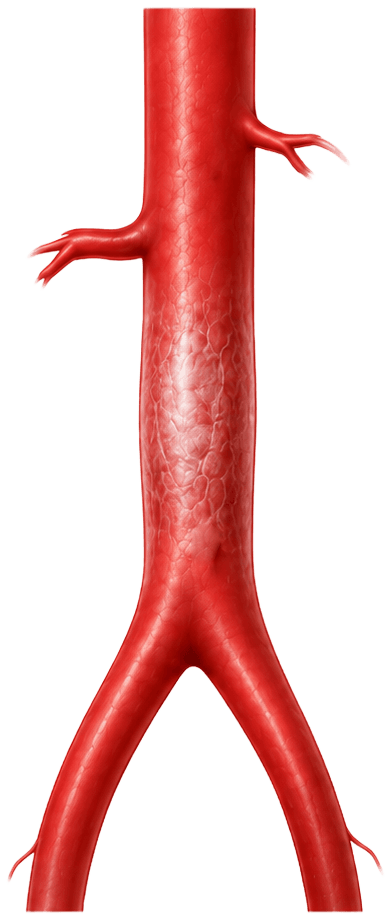
The aortic wall weakens
Over time the structural proteins in the aortic wall break down, often with age, smoking, or long-standing high blood pressure.
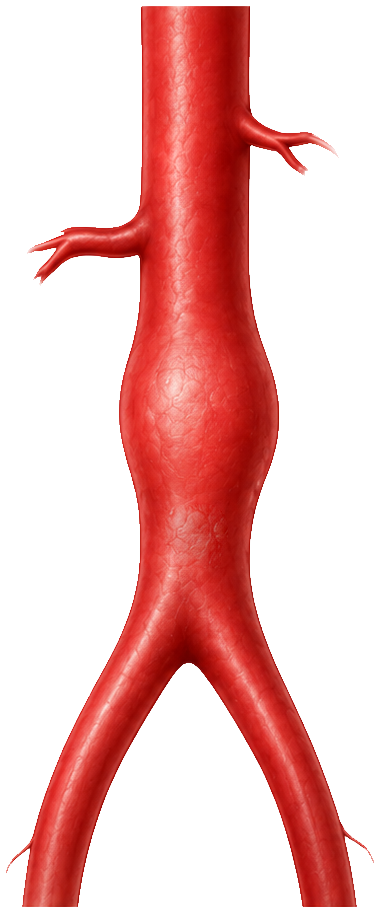
A bulge forms
The pressure of blood pushes against the weakened spot, and the aorta slowly balloons outward.
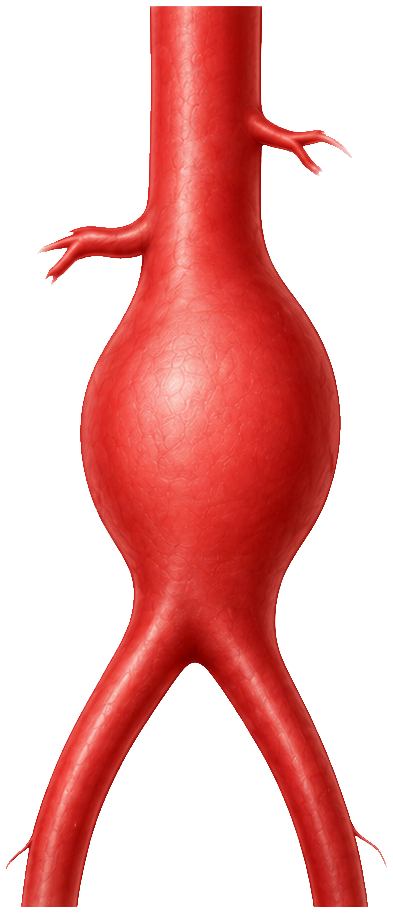
The bulge can grow
Left unwatched, the aneurysm gradually enlarges, and a large one can rupture, causing life-threatening internal bleeding.
Who should get screened
Men over 65 who have ever smoked are at the highest risk, and qualify for a one-time, Medicare-covered AAA screening. A family history of aneurysms or other vascular disease can be reason to screen too.
Some risk factors can be lowered: quitting smoking and keeping blood pressure healthy both help. If you're at higher risk, a quick, painless screening is the single best way to catch an aneurysm before it becomes dangerous.
Age over 65
Being male
Smoking
Family history
High blood pressure
Chronic lung disease
Symptoms & warning signs
An aneurysm almost always grows silently, so it’s usually found on a scan. When symptoms do appear, they can signal an emergency.
Most aneurysms cause nothing you can feel. But a large or rupturing aneurysm can bring on sudden, severe symptoms that need emergency care:
Call 911 right away
Sudden, severe belly or back pain can mean an aneurysm is rupturing: a life-threatening emergency. Get to the nearest emergency room right away.
How we diagnose it
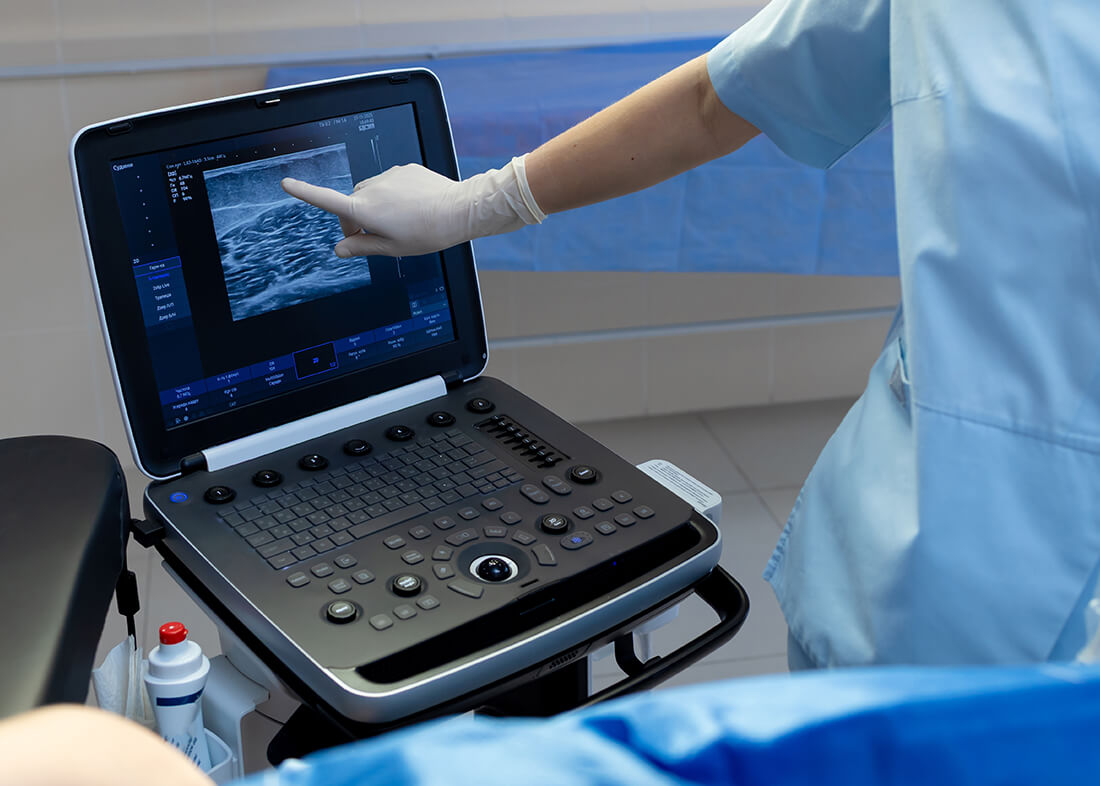
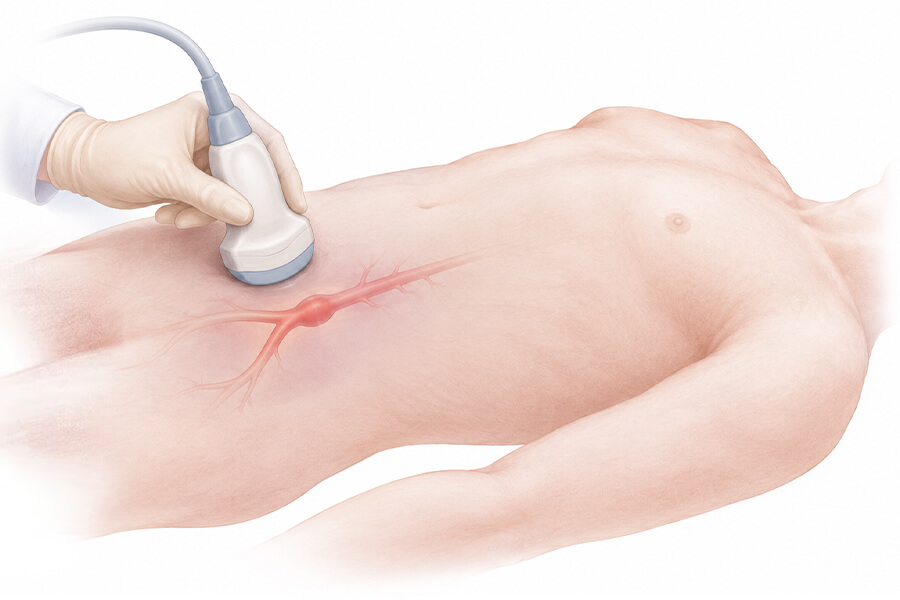
The key test is a quick, painless abdominal ultrasound in our accredited vascular lab, available at every office.
Exam & history
A specialist reviews your history and risk factors, feels the abdomen for a pulsing mass, and checks the pulses in your legs.
Abdominal ultrasound
This simple scan shows the size and location of an aneurysm.
CT scan or MRI
Once an aneurysm is found, detailed imaging maps it precisely so your surgeon can plan the safest treatment.
Your treatment options
How an aneurysm is treated depends mostly on its size. Small ones are watched closely; larger ones are repaired, with a minimally invasive procedure whenever possible.
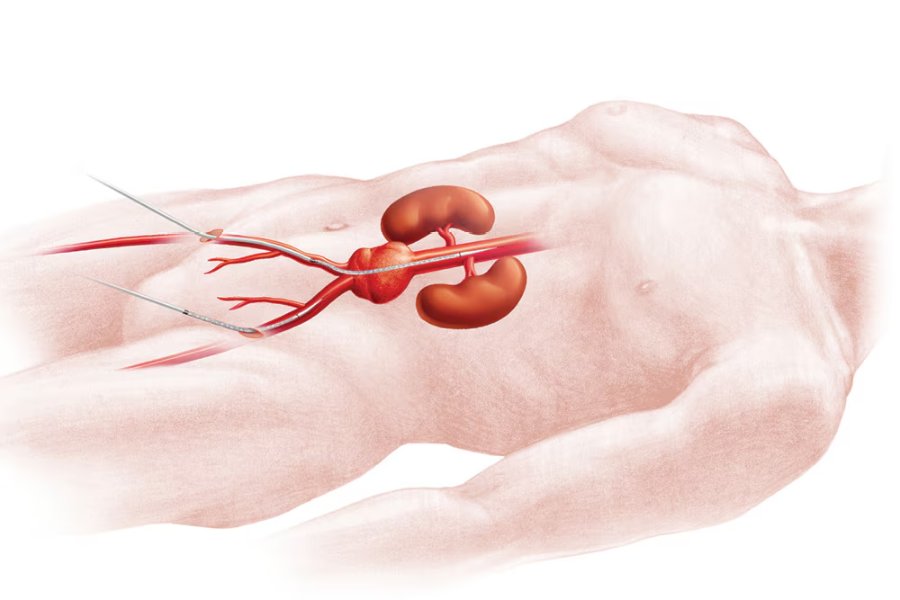
At Empire Vein, we repair abdominal aortic aneurysms with the minimally invasive EVAR approach, not open surgery. Your specialist confirms your anatomy is suited to it before anything is scheduled.
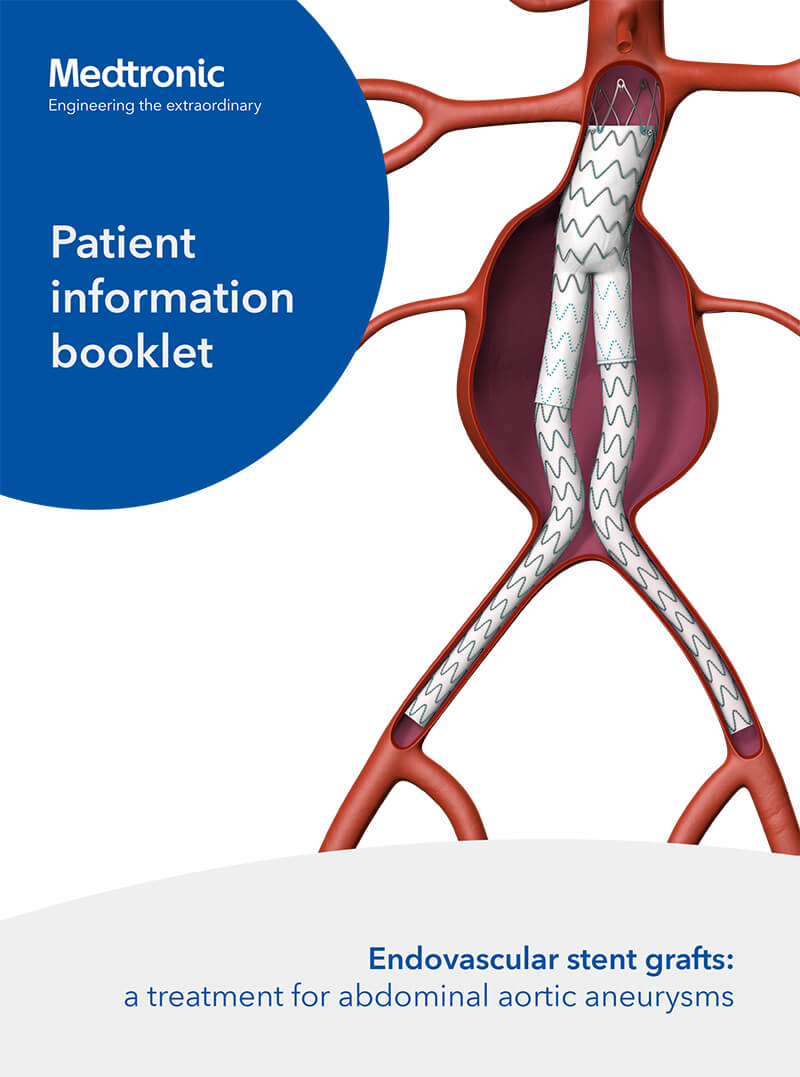
Patient guide
Endovascular stent grafts
A detailed booklet on how a stent graft repairs an abdominal aortic aneurysm, what the procedure involves, and what to expect during recovery and follow-up.
Download the guideAbdominal aortic aneurysm, answered
The questions patients ask us most about aneurysms and EVAR.
Usually not. Most aneurysms, especially those under about 5 cm, can be safely monitored rather than operated on. Even when repair is recommended, it's rarely emergency surgery. It's planned in advance, with you.
You'll go into a simple surveillance program: a quick, noninvasive ultrasound once or twice a year to watch for any growth. Quitting smoking and keeping your blood pressure controlled are the most effective ways to slow it down.
Because they grow silently, often over months or years, with no symptoms at all. If a large aneurysm ruptures, it causes sudden, massive internal bleeding that can be fatal. That's exactly why finding one early, before it ruptures, makes such a difference.
Not smoking makes the biggest difference, and if you smoke now, quitting is the most powerful step you can take. Keeping your blood pressure well controlled helps too. And because family history raises your risk, ask about getting screened: a one-time ultrasound is quick and painless.
Often, yes. Medicare covers a one-time abdominal aortic aneurysm screening ultrasound for people at higher risk, including men aged 65 to 75 who have ever smoked and people with a family history of aneurysm. If you think you qualify, ask us and we'll help you check.
Look for a board-certified vascular surgeon with real training and experience in the latest minimally invasive techniques. At Empire Vein, aneurysm care is a core specialty: we focus on the minimally invasive EVAR repair, monitor small aneurysms conservatively instead of rushing to operate, and plan every repair with you.
Insurance
When your veins cause symptoms like aching, swelling, or skin changes, treatment is typically considered medically necessary, including under Medicare. We'll help you verify your benefits.
Most major plans accepted






Locations
Care close to home across the Inland Empire, High Desert, and Coachella Valley. Every office has on-site ultrasound.
High Desert
Coachella Valley
Early detection is everything.
A quick, painless screening can find an aneurysm long before it becomes dangerous. Offered at all 6 of our Southern California offices.