
Knee osteoarthritis (OA) is one of the most common chronic joint conditions [1]. It occurs when the cartilage in the knee breaks down over time, leading to pain, stiffness, and swelling. Moving your knee becomes increasingly difficult as OA progresses, making daily activities like walking or climbing stairs more challenging. The condition can also cause inflammation and changes in the bone structure around the joint.

Download the Free E-book
Fill out this short quiz to find out if Genicular Artery Embolization might help with your symptoms.
Est Time to Complete: ⏱️ 30 seconds
Current treatments for arthritis and their limitations:
Several treatment options exist for knee arthritis, but they often come with limitations [3]:
Physical Therapy
While it can benefit some patients, it can have limited results. This is especially true for those with advanced arthritis.
Corticosteroid Injections
These injections can offer temporary relief. The effects typically last only a few weeks to months.
Knee Replacement Surgery
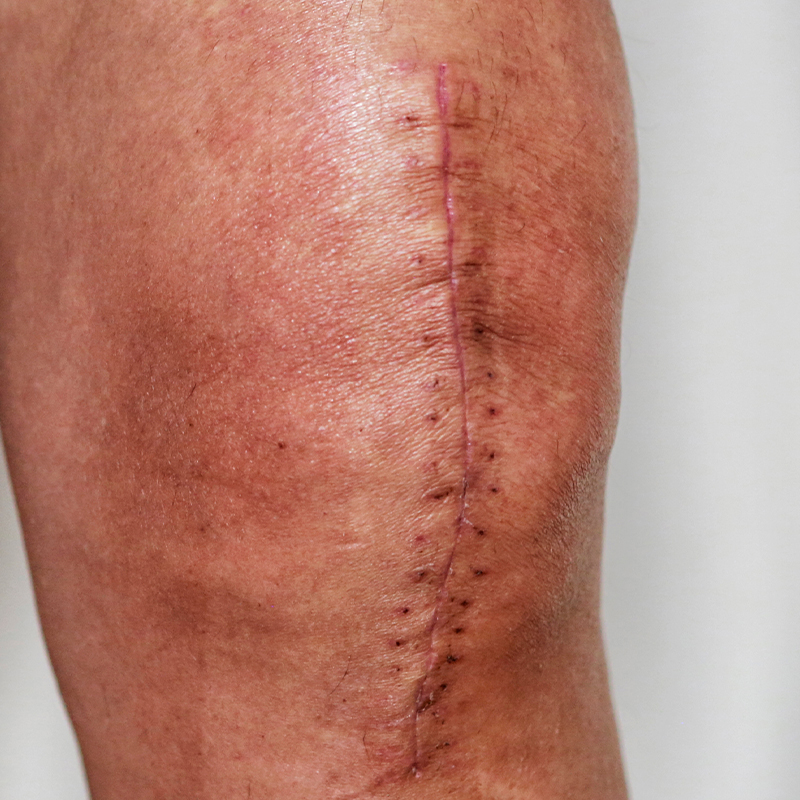
This invasive procedure provides a more permanent solution. However, it carries risks such as long recovery times and potential complications.
Hyaluronic Acid (HA) Injections
HA injections provide lubrication and cushioning in the knee joint. While some patients report temporary relief, the effectiveness can vary. The results typically last a few weeks to months.
What is Genicular Artery Embolization?
The New Alternative to Knee Replacement Surgery
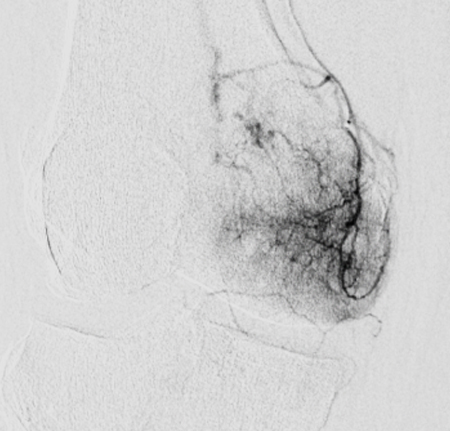
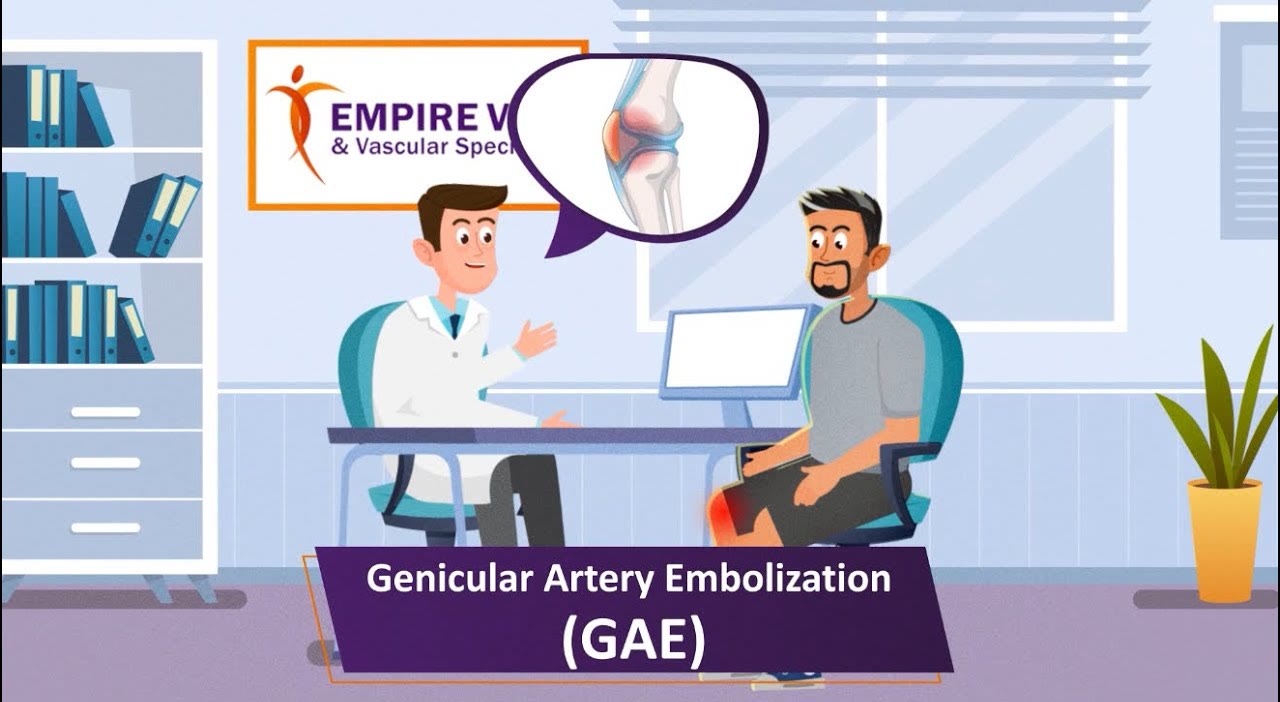
Genicular Artery Embolization (GAE) is a minimally invasive procedure designed to relieve knee pain caused by OA. It works by selectively blocking blood flow to inflamed areas of your knee joint. The genicular arteries are small blood vessels that supply blood to the synovial membrane of the knee. Genicular artery embolization helps reduce inflammation and pain associated with OA by blocking blood flow to the synovium, which is the tissue that lines the knee joint.
A catheter is inserted through a small incision in your thigh during the procedure. This is guided by fluoroscopy (real-time X-ray imaging). Tiny particles or microspheres are injected into the targeted arteries to block blood flow, reducing inflammation in your knee joint. This procedure is performed outpatient, usually in less than an hour, with immediate return to activity.

Who can benefit from genicular artery embolization?
The GAE procedure is particularly beneficial for people who:
- Have moderate to severe knee pain due to OA.
- Are between 40 and 80 years old.
- Have not found relief from conservative treatments such as NSAIDs (non-steroidal anti-inflammatory drugs), physical therapy, or corticosteroid injections.
- Are either unwilling or ineligible for knee replacement surgery.
If you have advanced arthritis, as indicated by X-ray findings, this procedure may not be for you.
Patients with mild to moderate OA have been shown to benefit the most from genicular artery embolization. Most patients notice significant pain relief.
How does the procedure work?
The GAE procedure aims to relieve knee pain associated with OA. It is typically an outpatient procedure. This means you will not need general anesthesia and recover quickly.
Here’s what to expect:
What to expect during and after the procedure
You can expect a relatively straightforward experience when undergoing genicular artery embolization:

During the Procedure
Most patients report minimal discomfort due to local anesthesia and sedation.

Post-Procedure Care
You may experience mild discomfort or bruising at the injection site. Over-the-counter pain relievers can help manage any pain. It’s important to avoid strenuous activity for a few days to allow the procedure to take effect.

Long-Term Improvement
Most patients notice significant improvements in pain levels lasting at least one year following genicular artery embolization, with average pain scores dropping significantly after treatment.
When to consult a doctor
If you suffer from chronic knee pain, consult your healthcare provider if:
- You have persistent pain not relieved by conservative treatments.
- Your mobility is significantly affected by knee discomfort.
- You want to explore alternative options like genicular artery embolization for relief without surgery.
The genicular artery embolization procedure targets the sources of knee pain by blocking blood flow to inflamed areas. At Empire Vein and Vascular Specialists, our expert team is committed to providing effective pain relief through this innovative procedure. We understand how knee pain can impact your daily life. Our board-certified vascular surgeons use their extensive expertise in vascular surgery and non-invasive treatments to deliver personalized care tailored to your unique needs. Additionally, most of our treatments are covered by insurance, and we’ll work directly with your provider to help secure coverage.
If you want to learn more about our treatment options, contact Empire Vein Specialists to schedule a consultation or call us at 1-800-VARICOSE today.
Frequently Asked Questions About Genicular Artery Embolization (GAE)
Genicular artery embolization (GAE) is a minimally invasive, image-guided procedure designed to alleviate chronic knee pain caused by osteoarthritis—without the need for surgery. Osteoarthritis is a degenerative joint disease that leads to cartilage breakdown in the knee joint, resulting in inflammation, pain, stiffness, and swelling.
Ideal candidates for GAE are individuals over the age of 40 who experience moderate to severe knee pain due to osteoarthritis, along with symptoms like knee tenderness, stiffness, and a lack of response to conservative treatment options such as medications, physical therapy, and knee injections.
No, GAE is not classified as major surgery. It is a minimally invasive procedure carried out by a vascular surgeon using image guidance, which involves accessing the genicular arteries around the knee joint through a small incision in the groin area. Compared to traditional open surgeries like knee replacement, GAE is far less invasive, resulting in smaller incisions, less trauma to surrounding tissues, and generally shorter recovery times. The procedure is outpatient, typically lasting about one hour, and patients are often able to walk immediately afterward.
GAE is performed under moderate “twilight” sedation as an outpatient procedure, allowing patients to return home the same day. The process usually takes between one to two hours. Our experienced EVVS physicians insert a small catheter (a thin hollow tube) into the artery of the upper thigh and use X-ray guidance to navigate the catheter to the arteries that supply blood to the knee. Tiny particles are then injected through the catheter into these arteries, reducing blood flow and, consequently, the inflammation associated with osteoarthritis, which helps to alleviate pain.
Osteoarthritis leads to inflammation around the knee joint, which can result in the abnormal growth of small arteries, causing pain. GAE targets and eliminates these abnormal arteries, thereby decreasing inflammation and relieving pain. It’s important to note that it does not eliminate the genicular arteries themselves—just the small abnormal branches coming off of them.
GAE is considered very safe. Minor risks may include some bruising at the groin puncture site, along with temporary skin bruising and stiffness around the knee for a few days. In contrast, total knee replacement carries significant risks, such as infection, non-healing, scar tissue, blood clots, and nerve damage.
Since GAE is performed as an outpatient procedure under sedation, patients can expect to go home the same day. Light activities, such as walking, can commence immediately, while driving can be resumed the following day. Strenuous physical activities, like golf or weight training, can typically be resumed within two weeks.
Unlike steroid injections in the knee, the benefits of GAE can last for years, with most patients experiencing relief for over 2 to 3 years.
An impressive 80% of patients achieve more than a 50% reduction in knee pain for years following the procedure.
Most insurance plans, including Medicare, IEHP, and many Medicare Advantage plans, cover GAE. Patients are encouraged to come in for a consultation, where we can verify insurance eligibility prior to proceeding with the GAE procedure. We also provide cash pricing options for GAE.
We hope this FAQ helps clarify the process and benefits of Genicular Artery Embolization. If you have any further questions, don’t hesitate to reach out! Your journey to knee pain relief is just around the corner.