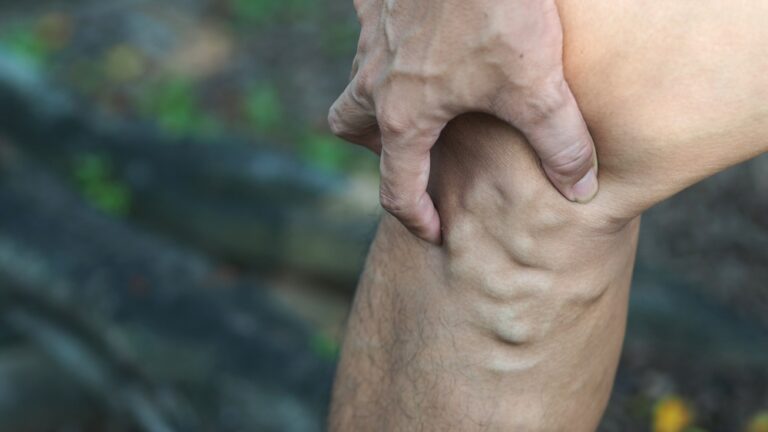


Varicose veins over the ankle may appear raised, twisted, or noticeably bluish beneath the skin. Spider veins in the ankles are small surface veins that appear as thin red, blue, or purple lines, resembling a sunburst or a web.
While some people do not experience symptoms, the appearance of these veins is an important sign of underlying issues. When symptoms are present, people may notice swelling, skin discoloration, or a painful vein over the ankle bone that can feel heavy or throbbing. In some cases, these veins are mainly a cosmetic concern; in others, they signal a circulation problem that could benefit from medical evaluation.
Why Varicose Veins Commonly Appear Near the Ankles
The veins in the legs work hard to move blood back to the heart, pushing it upward against gravity. To do this, the veins contain small, one-way valves that act like doors, opening to allow blood to move upward and closing to prevent it from flowing back down.
If these valves weaken or become damaged, blood can begin to flow backward and pool in the lower leg. This is called venous insufficiency, and it is a major cause of varicose veins. Research from the National Institutes of Health shows that chronic venous insufficiency is common, especially with age, as vein structure and function change over time.
The ankle is one of the lowest points on the leg, so it experiences the greatest gravitational pressure. Over time, this constant pressure, combined with faulty valves, causes the veins in this area to enlarge, twist, and become more visible. This is why varicose veins around the ankles are especially common in people who stand or sit for long periods. Your veins are fighting gravity and high pressure 24/7.
Main Causes Behind Ankle Varicose Veins
Several factors can lead to varicose veins and swollen ankles.
Venous insufficiency
When vein valves do not close properly, blood flows backward and pools in the lower leg. This increased pressure causes veins to enlarge and become more visible.
Prolonged standing or sitting
Jobs that require long periods of standing or sitting limit blood flow. Without regular muscle movement, blood return to the heart slows, increasing venous pressure.
Aging
As we age, vein walls and valves naturally weaken, increasing the likelihood of ankle varicose veins.
Genetics
A family history of varicose veins increases the likelihood of developing them. Genetics influences the strength and function of vein walls and valves.
Pregnancy
Increased blood volume and hormonal changes can relax the vein walls. Pressure from the growing uterus also makes varicose veins in the ankle more common.
Obesity or weight gain
Extra weight adds pressure to the leg veins, making it harder for blood to move upward.
Prior blood clots
Previous deep vein clots can damage vein valves, increasing the risk of varicose veins.
Hormonal changes
Hormones like estrogen can relax veins, which is why women are more likely to develop varicose veins and spider veins in their ankles.
Risk Factors That Make You More Susceptible
Some people are more likely to develop varicose veins around the ankle due to personal or lifestyle factors. These include:
- Age over 40
- Female gender
- Family history of vein disease
- Pregnancy
- Obesity
- Sedentary lifestyle
- Occupations requiring long hours of standing
- History of leg injury or surgery
- History of blood clots (deep vein thrombosis)
These factors do not always cause varicose veins, but they can increase the likelihood of valve weakness and blood pooling in the lower leg.
Potential Complications to Watch For
While many cases of ankle spider veins or small varicose veins are harmless, more significant vein disease can lead to symptoms or complications. It is important not to ignore signs of worsening circulation.
Possible complications include:
Swelling
Blood pooling can lead to swelling in the lower leg and ankle, especially at the end of the day.
Pain or aching
A painful vein over the ankle bone can indicate increased pressure or inflammation.
Skin discoloration
The skin around the ankle may become darker or more reddish-brown as blood leaks into the surrounding tissue. This is known as hemosiderin staining.
Itching or dry skin
Poor circulation can irritate the skin and cause itching or scaling.
Venous stasis dermatitis
This occurs when chronic swelling and inflammation damage the skin, sometimes leading to chronic irritation.
Venous ulcers
If circulation is poor for an extended period, open sores may form, particularly near the inside of the ankle. These ulcers can be slow to heal and require medical care.
If any of these changes occur, it is important to speak with a vein specialist. These signs may indicate underlying vein disease that requires treatment.
When to Consult a Vein Specialist
Not everyone with varicose veins needs immediate treatment. However, it is important to seek care if you experience any of the following:
- Persistent swelling around the ankle
- Discomfort, throbbing, or heaviness in the leg
- Skin discoloration or thickening near the ankle
- A painful vein over the ankle bone
- Slow-healing sores or ulcers
- Symptoms that interfere with daily activity or comfort
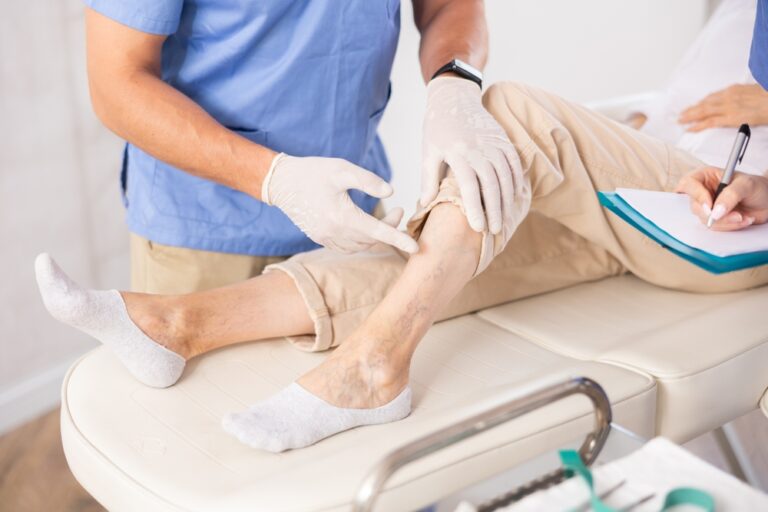
A vein specialist can evaluate blood flow with a simple ultrasound exam. This test shows how well your vein valves are working and helps determine if venous insufficiency is present.
Treatment options depend on severity but may include:
- Compression stockings to reduce swelling and improve circulation
- Lifestyle adjustments such as elevating the legs, walking more often, or weight management
- Minimally invasive vein treatments, such as laser therapy, radiofrequency ablation, or sclerotherapy, are used to close or collapse damaged veins
These treatments do not require major surgery and are typically done in an outpatient clinic.
Final Thoughts
Visible or painful veins near the ankles are not always just cosmetic. They can be an early sign of vein disease, but they are treatable.
At Empire Vein & Vascular Specialists, our board-certified vascular specialists offer minimally invasive, in-office treatments to improve circulation and relieve discomfort. Treatment options include ClosureFast™ radiofrequency ablation, VenaSeal™ adhesive closure, and sclerotherapy for smaller surface veins, all designed for minimal downtime and lasting results.
We provide advanced, personalized care across multiple Southern California locations and accept most insurance plans, including Medicare, PPOs, HMOs, and IEHP. Our facilities are IAC-accredited, ensuring the highest standard of vein care.
If you’ve noticed bulging, tender, or changing veins around your ankles, call 1.800.VARICOSE or visit our website. We’re here to help you restore healthy circulation and feel your best.