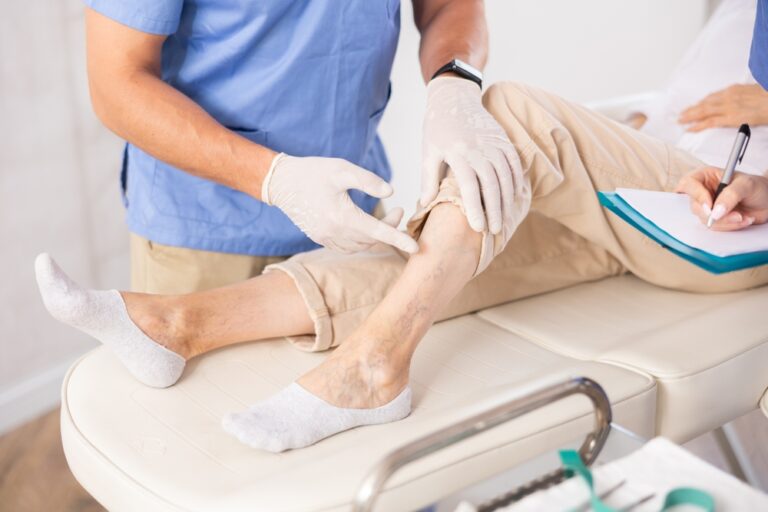


A swollen knee might seem like nothing more than a temporary inconvenience from overdoing it at the gym or spending too much time on your feet. Yet behind that puffy, uncomfortable joint could be warning signs of conditions that demand immediate medical attention.
Knee swelling occurs when excess fluid builds up in or around the joint, leading to visible enlargement, stiffness, discomfort, and often pain. While some episodes of swelling in the knee resolve quickly on their own, persistent or severe swelling may point to arthritis, infection, vascular issues, or other serious conditions. Left untreated, these problems can cause long-term joint damage or circulation complications.
Knowing when a swollen knee is harmless and when it could be dangerous is the first step toward getting the right care and protecting your mobility and quality of life.
Can a Swollen Knee Be Dangerous?
A swollen knee is caused by excess fluid building up inside or around the joint. Doctors often refer to this as knee effusion. While it can result from something minor like a bump or strain, it may also be linked to more serious issues, including:
- Infections, such as septic arthritis, can damage the joint if not treated quickly.
- Blood clots or vascular disease may restrict circulation in the leg.
- Severe arthritis, including osteoarthritis or inflammatory types like rheumatoid arthritis.
- Internal bleeding caused by injury, surgery, or certain medications.
Since vascular issues can contribute to knee swelling, it’s important to consider circulation problems as a potential underlying cause, especially when swelling persists or spreads beyond the knee joint.
The real danger comes when swelling in the knee is ignored. Left untreated, it can worsen joint damage, limit mobility, and decrease quality of life. According to clinical research, untreated joint swelling can lead to cartilage loss and long-term disability in some patients.
Common Causes of Knee Swelling
Knee swelling can happen suddenly or develop over time. Understanding the most common causes can help you recognize when to seek care.
1. Injury
Trauma, like a torn ligament, fractured bone, or meniscus tear, is one of the leading causes of a swollen knee with pain. Injuries often trigger bleeding inside the joint or fluid buildup, leading to rapid swelling.
2. Osteoarthritis
Wear-and-tear arthritis is one of the most frequent reasons adults over 40 experience chronic knee swelling. As cartilage breaks down, the bones rub against each other, causing inflammation and excess fluid.
3. Inflammatory conditions
Diseases like rheumatoid arthritis, lupus, or gout cause the immune system to attack tissues, resulting in joint inflammation and swelling.
4. Infection
A bacterial infection inside the knee joint (septic arthritis) can be serious and requires urgent medical care. Redness, warmth, fever, and severe pain with swelling are common warning signs.
5. Circulation problems
Poor circulation, venous disease, or blood clots in the leg may also cause swelling above the knee or around the joint. Vascular specialists often evaluate whether circulation is a contributing factor when patients present with persistent swelling, as underlying blood flow issues can manifest as knee swelling even when the joint itself appears healthy.
When Knee Swelling Is a Warning Sign
Not all swelling is a cause for alarm. However, certain patterns suggest something more serious:
- Rapid swelling after an injury may point to ligament tears or fractures.
- Persistent swelling lasting more than a few days could be a sign of arthritis or vascular issues.
- Fever, chills, or warmth in the joint may indicate infection.
- Swelling that spreads above the knee or down the leg may suggest a circulation problem or a blood clot.
- Severe stiffness and loss of motion can be linked to advanced joint disease.
Can a swollen knee be dangerous? The answer is yes, particularly when it doesn’t improve with rest or is accompanied by other red flags.
How To Tell if Your Swollen Knee Needs Medical Attention
It’s not always easy to tell whether knee swelling is minor or a sign of something more serious.
Seek immediate medical attention if you experience:
- Sudden swelling and severe pain after a fall or accident.
- Redness, warmth, or fever along with swelling.
- Inability to bear weight on the knee.
- New or worsening swelling above the knee.
- A history of vascular problems, varicose veins, or clotting disorders.
At-Home Remedies That May Help Reduce Swelling
For mild cases of swelling in the knee, certain at-home treatments may provide temporary relief:
- Rest and activity modification: Avoid movements that worsen pain.
- Ice therapy: Apply ice packs for 15-20 minutes at a time to reduce inflammation.
- Compression sleeves: Wearing a snug (not tight) compression wrap can help manage fluid buildup.
- Elevation: Keeping the leg elevated above heart level helps decrease swelling.
- Over-the-counter medication: Anti-inflammatory drugs (NSAIDs) may help control pain and swelling.
These approaches may ease discomfort but are not long-term solutions if swelling is recurring. Persistent or worsening symptoms require evaluation by a specialist.
When To See a Specialist for Persistent Knee Swelling
If your swollen knee doesn’t improve with rest, ice, or other at-home remedies, it may be time to see a specialist who understands both vascular and musculoskeletal causes of knee pain and swelling.
One advanced option is Genicular artery embolization (GAE), a minimally invasive procedure that helps patients with knee osteoarthritis find lasting relief.
During GAE, a vascular specialist makes a tiny incision in the thigh and inserts a catheter into the arteries around the knee using fluoroscopy (real-time X-ray guidance). Through this catheter, microscopic particles are delivered to block abnormal blood vessels that contribute to inflammation and pain.
Benefits of GAE include:
- Performed as an outpatient procedure with only a small skin puncture
- Preserves your natural knee joint
- Provides meaningful pain relief without major surgery
- Covered by many insurance plans, including Medicare, PPOs, and IEHP.
GAE may be especially beneficial for people who:
- Have moderate to severe knee pain due to osteoarthritis
- Are between 40 and 80 years old
- Have not found relief from conservative treatments such as NSAIDs, physical therapy, or injections
- Want to avoid or are not candidates for knee replacement surgery
Key Takeaways
A swollen knee should never be ignored, especially a swollen knee with pain that is persistent or accompanied by signs of infection or circulation problems. While some cases may improve with simple rest and self-care, others require expert evaluation and treatment.
At Empire Vein & Vascular Specialists, we provide trusted, non-surgical solutions that help patients return to living without constant pain or limitations. The best step you can take is to have it checked by a board-certified specialist.
Other benefits of seeking care with Empire Vein & Vascular Specialists include:
- Board-certified vascular and interventional radiology specialists
- Coverage by Medicare, PPOs, HMOs, and IEHP
- Multiple locations throughout Southern California
Take the first step toward relieving knee swelling. Call 1-800-KNEE-CARE or visit our website to schedule your consultation and explore whether treatments like GAE could be right for you.