

Many people are surprised when they stand after sitting for a while and experience knee stiffness or discomfort. If you have ever wondered why your knees hurt when you sit, you are not alone. Knee pain after sitting too long is a common complaint, especially among adults over 40, office workers, frequent travelers, and people with underlying joint or vascular conditions.
Knee pain affects nearly 1 in 4 adults at some point in their lives. Prolonged sitting has been identified as a key contributor to joint stiffness, muscle imbalance, and circulation issues. For many people, this pain may feel mild at first, but over time, it can interfere with mobility, sleep, work productivity, and overall well-being. Activities such as driving, watching a movie, working at a desk, or flying long distances can become uncomfortable or even painful. 1
Understanding why sitting can cause knee pain is the first step toward preventing it. It’s also important to recognize when knee pain may indicate a more serious condition that requires medical evaluation.
What Happens to Your Knees When You Sit for Too Long?
When you sit for extended periods, your knees remain bent, reducing movement. This posture places stress on the knee joint and surrounding structures in several ways.
Increased joint compression
Sitting with knees bent increases pressure between the kneecap (patella) and the thigh bone (femur). Research shows that prolonged knee bending increases compression behind the kneecap (patellofemoral joint), particularly in people with early cartilage wear or arthritis.2
Poor circulation
Movement is essential for joint health. Inactivity deactivates the “calf muscle pump,” leading to blood pooling and increased venous pressure around the knee. This may explain why some notice that their “knee hurts when sitting but not walking,” as movement helps circulate synovial fluid and move blood. Without this “pumping” action, the joint lacks the lubrication needed to stay supple, resulting in stiffness when you stand.
Muscle tightness and misalignment
Prolonged sitting keeps your hamstrings and hip flexors in a shortened state. Over time, these tight muscles can pull the kneecap out of its proper alignment (maltracking). When you finally stand, this imbalance puts extra strain on the tendons and ligaments as they work to stabilize the joint.
In some cases, knee pain after sitting may also be related to underlying conditions such as:
- Early osteoarthritis
- Patellofemoral pain syndrome
- Tendinitis or bursitis
- Venous insufficiency affecting circulation in the legs
This is why knee pain from sitting too long should not be dismissed if it becomes frequent, persistent, or progressively worse.
Risk Factors That Make Knee Pain Worse During Long Periods of Sitting
While anyone can experience knee discomfort after sitting, certain factors make symptoms more likely or more severe.
Age plays a role, as cartilage naturally becomes thinner and less resilient over time. People over 40 are more likely to experience knee pain after sitting for too long due to early degenerative changes in the joint. 3
Excess body weight increases pressure on the knees, even while sitting. Each additional pound adds stress to the joint structures, contributing to pain and inflammation.
Poor posture and ergonomics are also important contributors. Sitting with knees bent sharply, feet unsupported, or hips positioned too low can increase joint compression and muscle tension.
Low physical activity levels further worsen the problem. Weak leg muscles provide less support for the knee joint, making stiffness and pain more noticeable after inactivity.
Finally, vascular conditions affecting leg circulation may cause aching, heaviness, swelling, and fatigue. While not all knee pain is vascular in origin, symptoms that worsen with prolonged sitting and improve with movement should be evaluated carefully.
Protect Your Knees and Prevent Pain from Prolonged Sitting
The good news is that many cases of knee pain from sitting too long can be improved or prevented with simple, consistent changes.
Break up long periods of sitting
Remaining seated for extended periods slows circulation and allows stiffness to build in the knees. Standing, stretching, or walking for just 2 to 5 minutes every 30 to 60 minutes helps restore blood flow and keeps the knee joints moving more freely.
Improve your sitting posture
How you sit matters. Keep your feet flat on the floor, your hips level with or slightly higher than your knees, and your back supported by your chair. Avoid sitting with your legs crossed for long periods, as this can restrict blood flow and increase stiffness.
Keep your knees moving
Gentle movement throughout the day helps prevent stiffness from setting in. Simple exercises such as knee extensions, ankle pumps, or brief standing stretches can reduce discomfort and pain.
Strengthen and support your knees
Regular low-impact exercise, such as walking, cycling, swimming, and light strength training, helps support the muscles around the knee and improves circulation. In some cases, guided physical therapy may be recommended to address muscle imbalances, improve flexibility, and support healthy movement patterns.
Use compression when needed
If knee discomfort is accompanied by leg swelling, heaviness, aching, or fatigue, compression stockings may help. When properly fitted, they support healthy blood flow and reduce fluid buildup in the legs, easing pressure around the knees.
Taking proactive steps to protect your knees can reduce discomfort, improve mobility, and help prevent pain from becoming a long-term problem.
When to See a Specialist
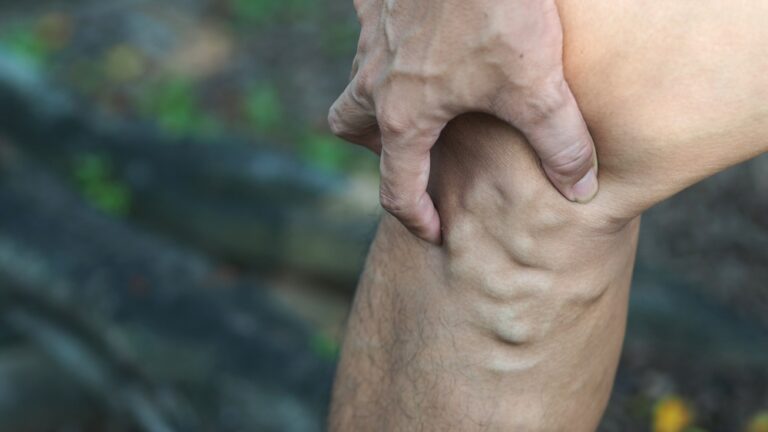
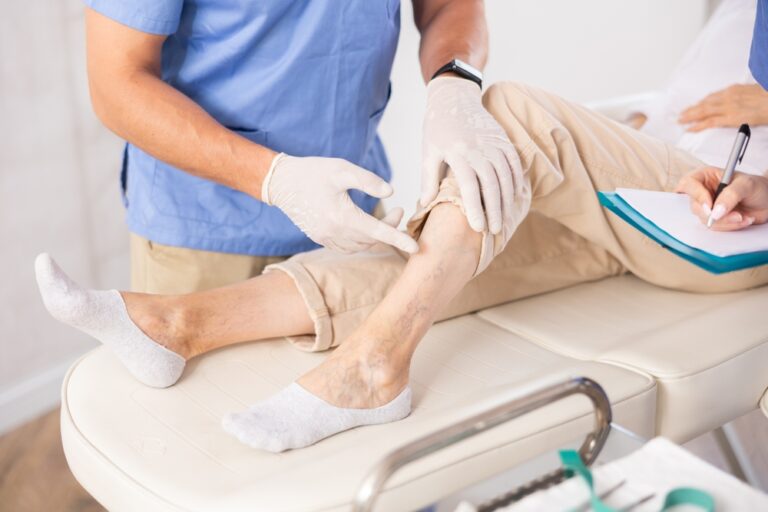
While knee pain from sitting too long is often associated with joint issues, it may actually indicate a vascular problem. Especially if accompanied by swelling, visible veins, skin changes, or a heavy, restless feeling in the legs. If your discomfort is impacting your sleep, mobility, or daily quality of life, it’s time to seek a specialist. A thorough evaluation may include a physical exam, imaging tests, and a circulation assessment to identify the true cause of your pain.
At Empire Vein & Vascular Specialists, we look at the whole picture. Because knee pain is often linked to poor circulation, our board-certified specialists use advanced diagnostic testing to identify the underlying issue and guide appropriate treatment.
We are proud to be accredited by the Intersocietal Accreditation Commission (IAC), ensuring the highest standards of diagnostic accuracy across our convenient Southern California locations. To make your path to relief even easier, we accept most major insurance plans, including Medicare, PPOs, HMOs, and IEHP.
Give us a call today at 1-800-KNEE-CARE or visit our website to learn more about how we can help you find relief.