





Before you replace your knee, compare your options
of patients did not go on to knee replacement within two years after GAE
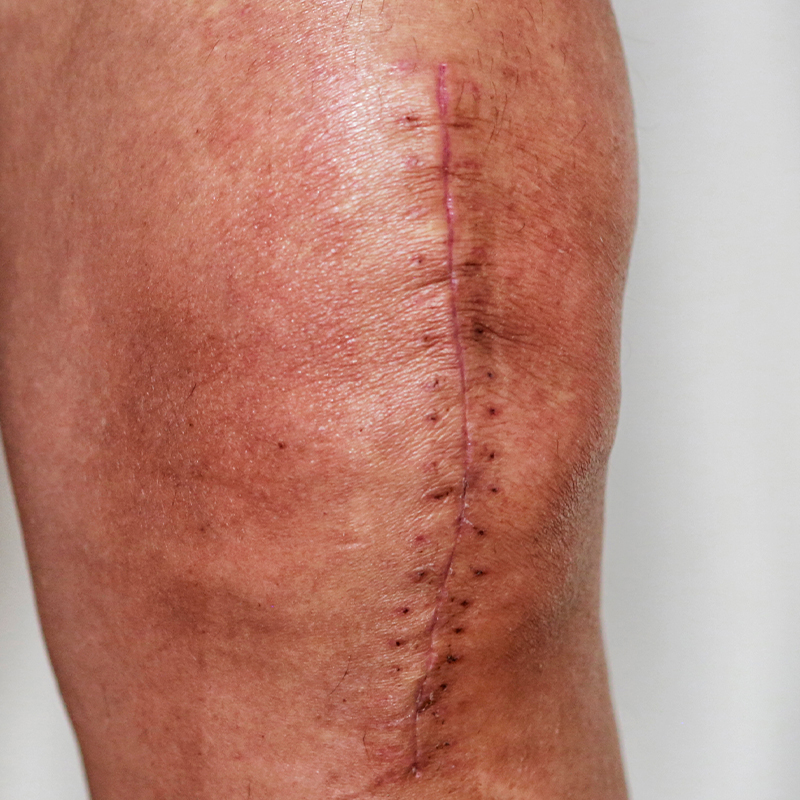
Knee replacement is major surgery
For severe, end-stage arthritis it can be an excellent treatment, and for some knees it's the right call. But it's a big operation: damaged bone and cartilage are surgically removed and replaced with metal and plastic components, followed by surgical healing, rehabilitation, and physical therapy. Risks worth understanding before you decide:
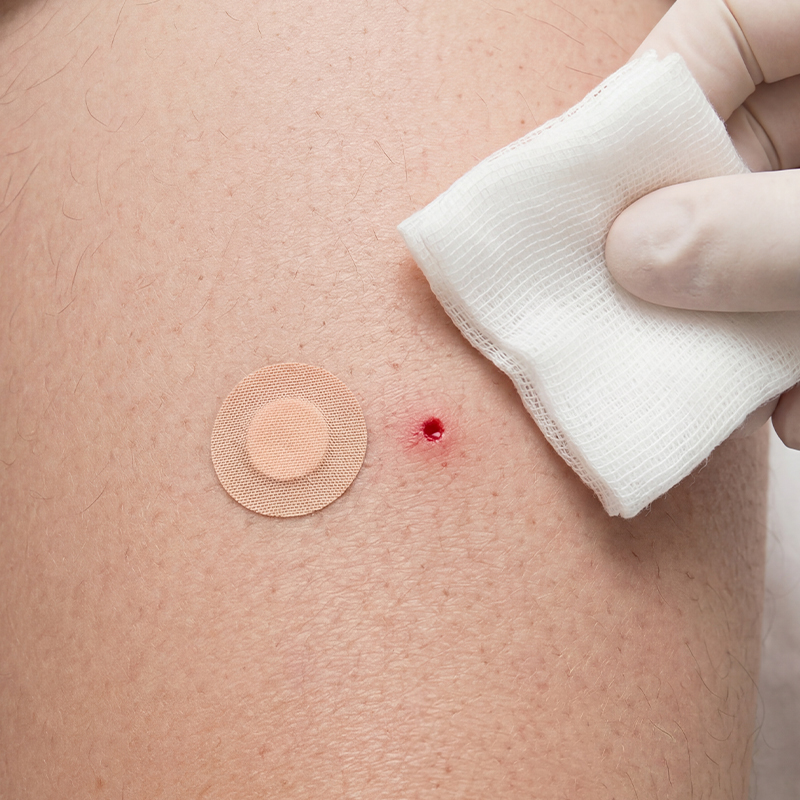
GAE is fundamentally different. It treats the abnormal blood vessels and inflammation driving the pain: no incision, no bone or cartilage removed, and no implant placed inside your knee. Most patients feel only mild soreness afterward, with lower risks of infection, blood clots, and anesthesia problems.
Days vs. weeks to months.
Downtime is what most people worry about, and here the two are worlds apart.
Back to life in days. A same-day outpatient procedure with a tiny access point, and most patients return to routine activities relatively quickly.
Recovery takes weeks to months. Surgical healing followed by rehabilitation and physical therapy.

What will it cost?
Cost follows the setting. One happens in a hospital, the other in an outpatient suite.
Usually costs less. An outpatient procedure with no hospital stay. Many plans cover it, including Medicare, IEHP, and most PPOs.
Typically more expensive. A hospital surgery with implant and therapy costs, so the total runs higher even with good insurance.

GAE doesn't burn bridges
GAE does not structurally alter your knee, so if you ever do need a knee replacement, that option remains fully available.
And in appropriate patients, GAE can potentially be repeated if symptoms return down the road.
Knee replacement is irreversible. GAE preserves your options.
Which treatment may be right for you?
An honest look at where each option tends to fit. Your specialist confirms the right path after reviewing your imaging.
GAE may fit if…
Knee replacement may fit if…
FAQ
Everything you need to know
Straight answers on how the two options really compare, from the specialist who performs them.

We're not here to talk you out of surgery. We're here to make sure you know there are other options first.
Not exactly. GAE relieves arthritis pain without surgery, and for many people it delays or removes the need for a replacement. But it does not rebuild a joint that is already worn out. For severe, end-stage arthritis, a knee replacement may still be the better long-term answer. The right choice depends on your knee and your goals, which is what a consultation is for.
Yes. GAE does not remove or alter any bone or cartilage, so it leaves every future option open. Many patients use it to buy comfortable, active years before considering surgery, and some never need surgery at all.
Coverage is expanding as GAE becomes more established, and many plans, including Medicare, IEHP, and most PPOs, cover it for the right candidate. Our team verifies your benefits before anything is scheduled, so you know where you stand up front.
Most patients experience relief lasting two years or longer. Many begin noticing improvement within weeks, with continued improvement over the following months. If pain returns down the road, GAE can be repeated, and other options remain available.
That is the honest answer only a specialist can give after looking at your imaging and hearing your goals. We will walk you through both paths clearly, with no pressure, so you can make the decision that fits your life.
Not sure which path is yours? Let's look together.
Book a knee pain consultation with our GAE specialist. We'll review your knee, explain your options clearly, and help you decide, with no pressure.