


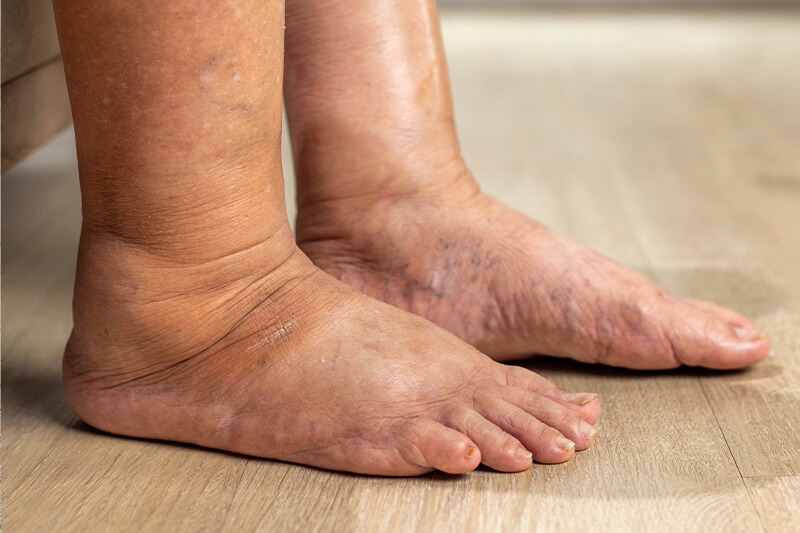
Why legs swell and feel heavy
Most day-to-day leg swelling comes down to circulation: blood and fluid settle in the lower leg when the veins can't move them back up efficiently.
Your leg veins carry blood upward against gravity, helped by one-way valves and the squeeze of your calf muscles. When those valves weaken and leak, blood pools in the lower leg. That's called venous insufficiency, and it's one of the most common reasons legs swell and feel heavy.
Valves stop sealing
Tiny one-way valves in your leg veins are supposed to keep blood moving up toward the heart. When they weaken, blood leaks backward and pools in the lower leg.
Pressure pushes fluid out
That pooled blood raises pressure in the veins, and the extra pressure forces fluid out into the surrounding tissue. That fluid is the swelling you see and feel.
Legs feel heavy and tired
As fluid builds through the day, the leg feels achy, heavy, and tight. It often eases overnight, once you lie flat and gravity stops working against you.
Signs & symptoms
Swelling and heaviness often travel together. Here's what patients notice, what they feel, and the signs worth getting looked at.
What you Notice
What you might Feel
When to get it Checked
Sudden swelling in one leg is different
If one leg swells quickly and feels painful, warm, or red, it can signal a blood clot (DVT). Call your doctor the same day, or 911 if you also have chest pain or trouble breathing.
When heavy legs point to your veins
Leg swelling has several possible causes, but when it comes and goes with your day and eases when you put your feet up, the veins are usually involved. This is chronic venous insufficiency: valves in the deeper leg veins leak, pressure builds, and fluid is pushed into the tissue. The good news is that it's very treatable once we confirm it.
If you notice any of the signs to the right alongside the swelling, a quick vein screening is worth it.
Signs the veins are involved
What contributes to it
Several everyday factors make venous leg swelling more likely. Many overlap, and some you can influence, which is why an evaluation helps pinpoint what's driving yours.
Swelling from the heart, kidneys, thyroid, or lymphatic system is treated differently, so confirming the cause matters.
Venous insufficiency
Standing or sitting all day
Pregnancy
Extra weight
A past blood clot (DVT)
Age
How we find the cause
A short, painless workup tells us whether your swelling is coming from the veins, and exactly where.
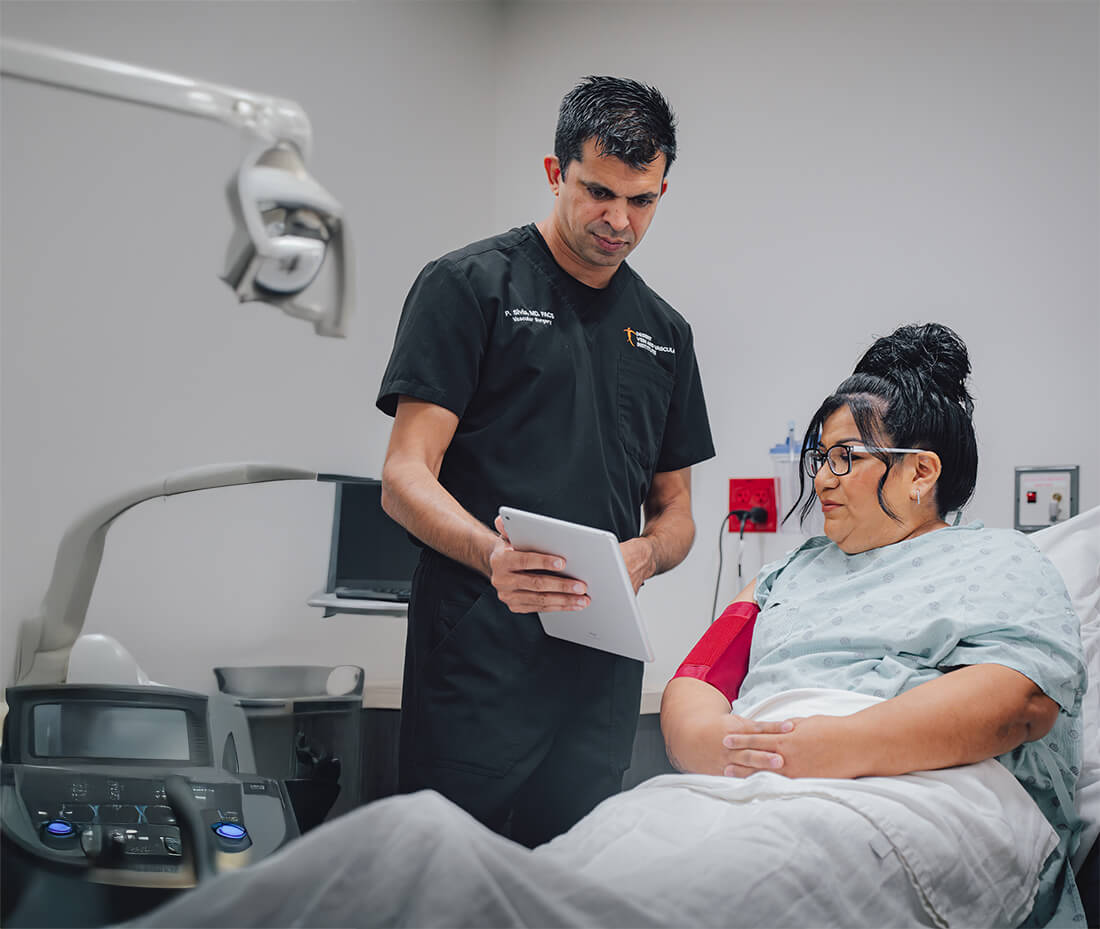
Exam & history
A specialist looks at both legs, asks when the swelling comes and goes, and reviews your health history to sort vein causes from others.
Duplex ultrasound
A painless scan in our accredited vascular lab checks whether the vein valves are leaking and where the pressure is building.
A clear plan
We explain what's driving your swelling, whether it's venous, and map out the simplest effective treatment, with cost reviewed up front.
How we treat it
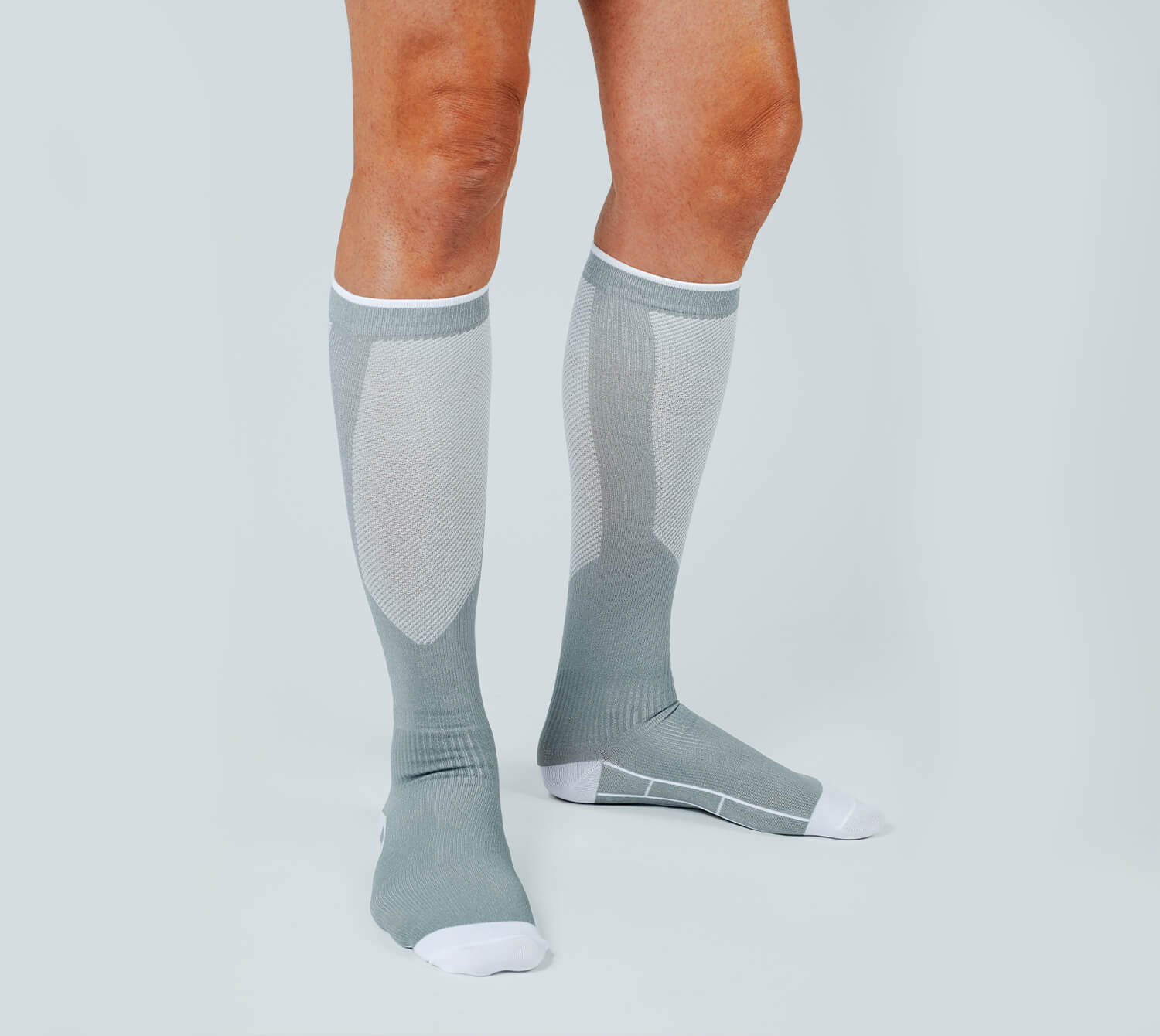
Relief usually starts simple and steps up only if needed. When leaky veins are the cause, treating the source is what makes legs feel light again.
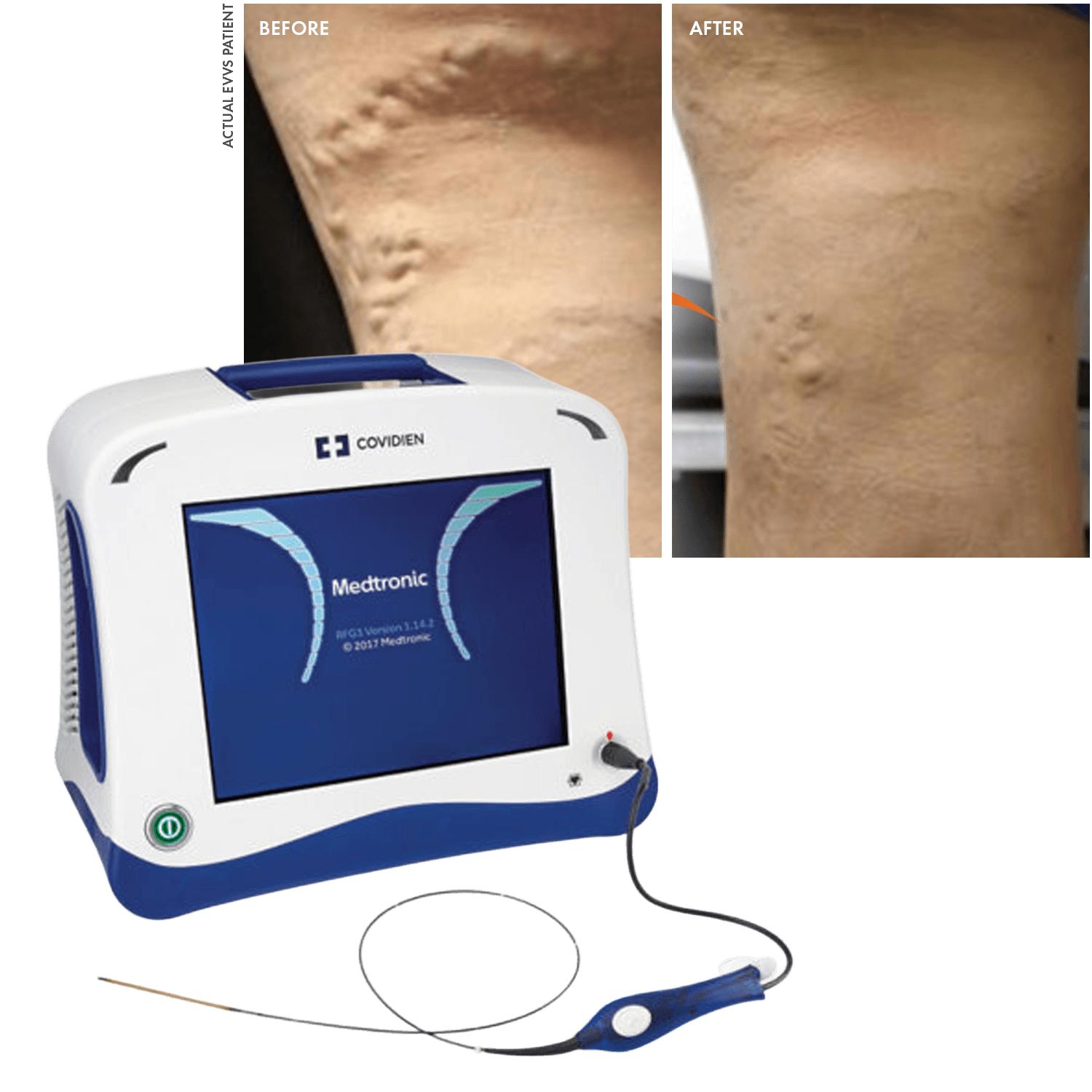
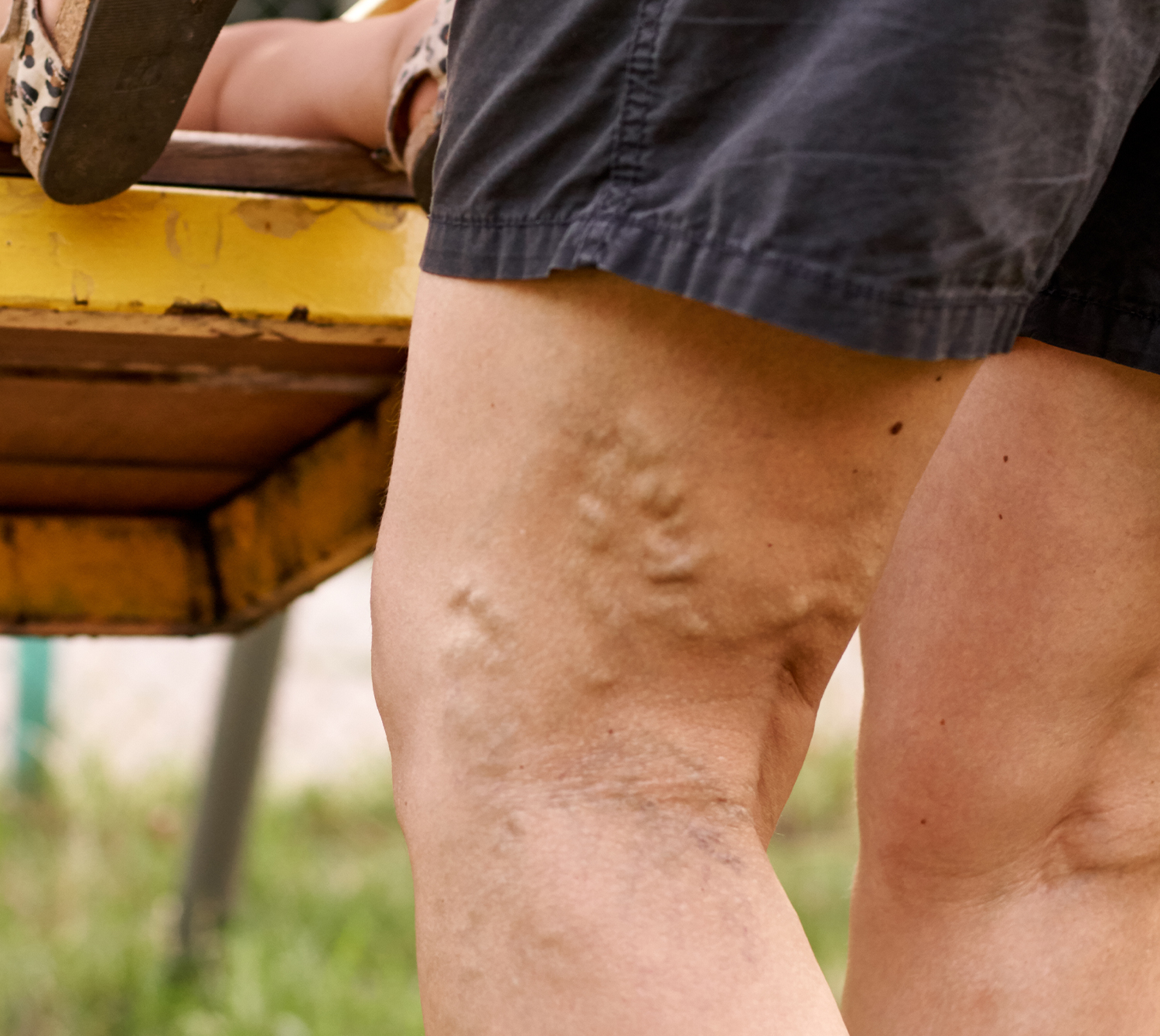
Seeing bulging veins too?
Heavy, swollen legs often come with varicose veins, the raised, rope-like veins that signal the same underlying reflux. See how we treat them for lasting relief.
Leg swelling questions, answered
The things patients ask us most about heavy, swollen legs.
With venous swelling, gravity works against you all day. As you stand and sit, blood and fluid settle in the lower legs, so the swelling builds by evening and usually eases overnight once you lie flat. That day-to-evening pattern is a classic clue that your veins are involved.
Not always. Veins are a very common cause, but swelling can also come from the heart, kidneys, thyroid, certain medications, or the lymphatic system. That's why we start with a proper evaluation, including a vein ultrasound, so you're treating the real cause rather than guessing.
Sudden swelling in one leg, especially with pain, warmth, or redness, can signal a blood clot (DVT) and needs same-day medical attention. Swelling with chest pain or shortness of breath is a 911 emergency. Ongoing, gradual swelling in both legs is far less urgent but still worth having checked.
Elevating your legs above heart level, moving and walking regularly, wearing properly fitted compression stockings, and limiting long stretches of standing or sitting all help. These ease symptoms, but if a vein problem is behind the swelling, treating the source is what gives lasting relief.
When leaky vein valves are the cause, closing the faulty vein lowers the pressure that pushes fluid into your leg, and most patients notice lighter, less swollen legs afterward. Your specialist confirms with ultrasound that reflux is the driver before recommending a procedure.
When leg swelling comes from a diagnosed venous problem, the medically necessary care is often covered, including by Medicare. Our team confirms your exact benefits after your screening, so you know any cost before you decide on anything.
Insurance
When your veins cause symptoms like aching, swelling, or skin changes, treatment is typically considered medically necessary, including under Medicare. We'll help you verify your benefits.
Most major plans accepted






Locations
Care close to home across the Inland Empire, High Desert, and Coachella Valley. Every office has on-site ultrasound.
High Desert
Coachella Valley
Ready for lighter legs?
Start with a free vein screening: a quick, painless look and a clear plan at any of our 6 Southern California offices.