



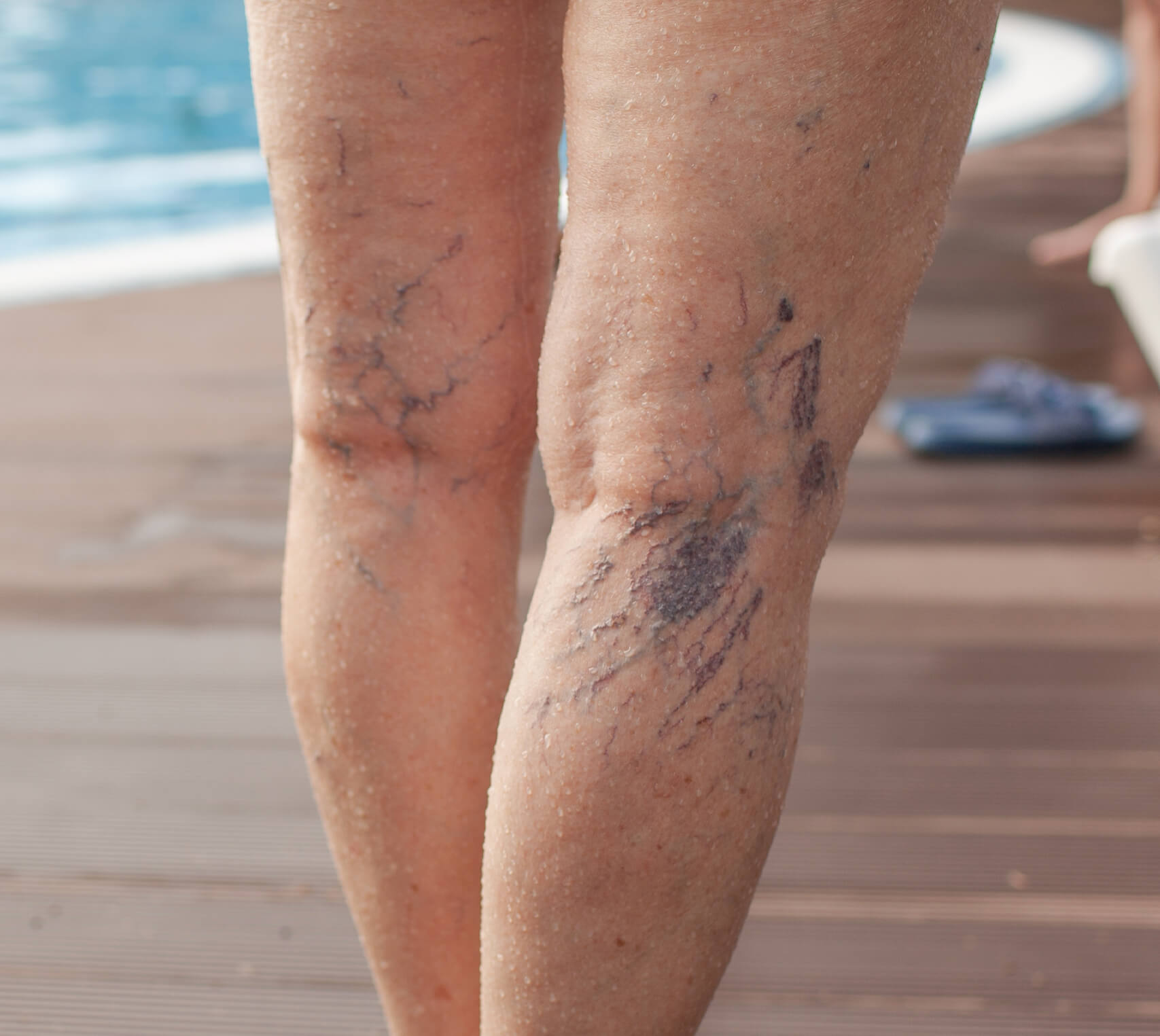
What are spider veins?
Despite the name, they aren't really veins. They're tiny damaged blood vessels just beneath the skin, known medically as telangiectasias.
Spider veins are small capillaries, venules, and arterioles that have weakened and widened until they show through the skin as fine red, blue, or purple lines. They often appear in branching, web-like clusters, most commonly on the legs, but also on the face.
Pressure builds underneath
When the deeper leg veins don't drain efficiently, back-pressure pushes outward on the tiny vessels just beneath your skin.
Vessel walls weaken
Genetics, hormones, sun exposure, or years of standing weaken these small vessels, so they dilate and stay open.
They surface as fine webs
The widened capillaries become visible as the branching red, blue, or purple clusters we call spider veins.
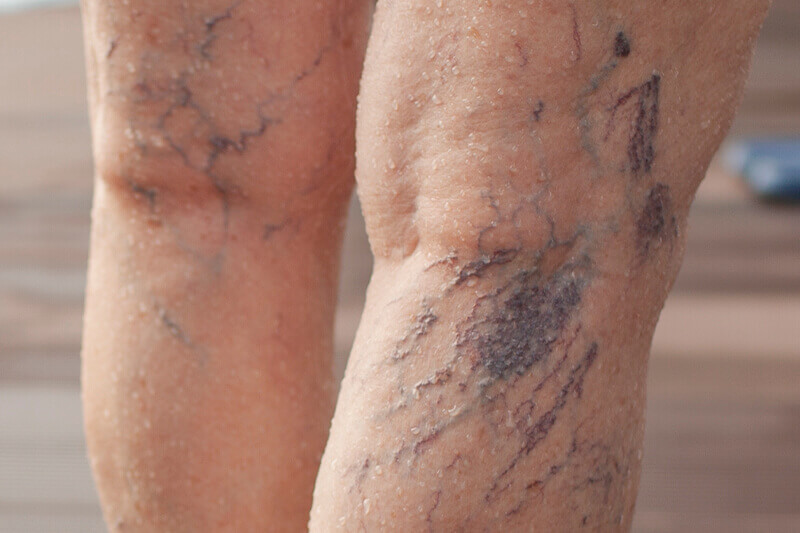
Signs & symptoms
Most spider veins are painless and easy to spot, but a few feelings are worth paying attention to.
What you See
What you might Feel
When to get them Checked
On deeper skin tones the classic red and blue can look more subtle, so it helps to have any new clusters checked rather than dismissed.
When spider veins signal something deeper
For many people, spider veins are purely cosmetic. But they can also be the surface sign of chronic venous insufficiency, where the valves in the deeper leg veins leak and let blood pool. Treating only the visible veins without checking for reflux is why spider veins so often come back. A quick ultrasound settles the question.
If you notice any of the signs to the right alongside your spider veins, it's worth getting checked.
Signs of underlying reflux
Who tends to get them
Spider veins are very common, especially in women, and several risk factors are simply out of your control. That's not a reason for worry, just a reason to get them looked at early.
Having a risk factor doesn't mean you'll get spider veins, and not having one doesn't rule them out. What matters most is whether you're noticing changes.
Family history
More common in women
Standing or sitting all day
Age
Sun & skin factors
Weight & inactivity
How we evaluate them
A few quick, painless steps tell us whether your spider veins are purely cosmetic or a sign of something to treat underneath.
Visual exam & history
A specialist looks at the pattern of veins, asks about your symptoms, and reviews your family history.
Ultrasound, if needed
If there are symptoms or signs of reflux, a painless duplex scan checks the deeper veins for the leak driving them.
A clear plan
We tell you whether it's purely cosmetic or reflux-related, map how many sessions you'll need, and review cost up front.
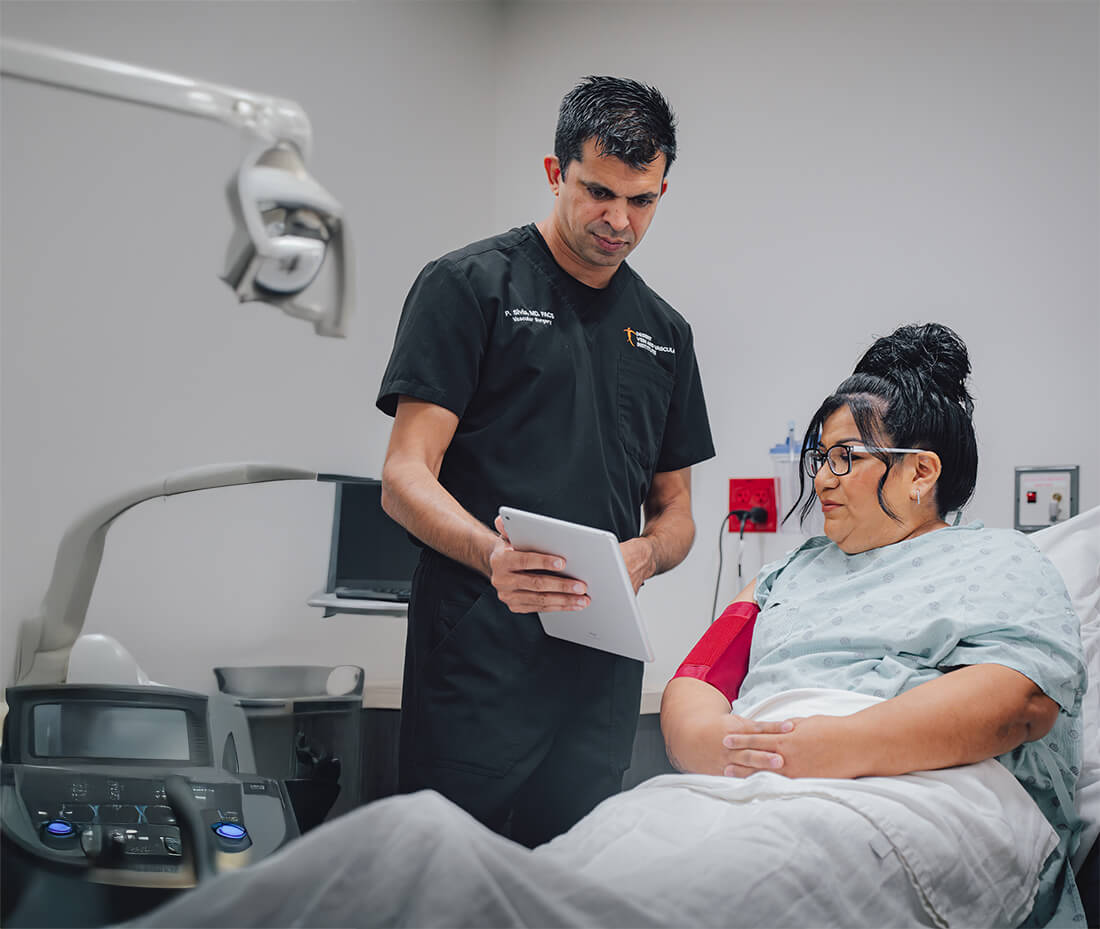
How we treat spider veins
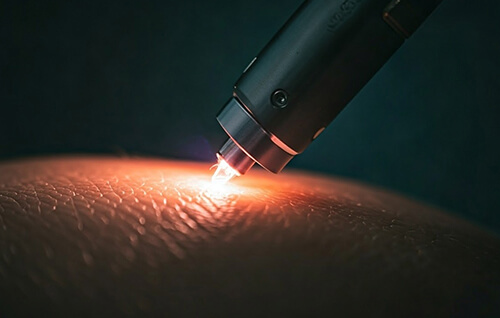
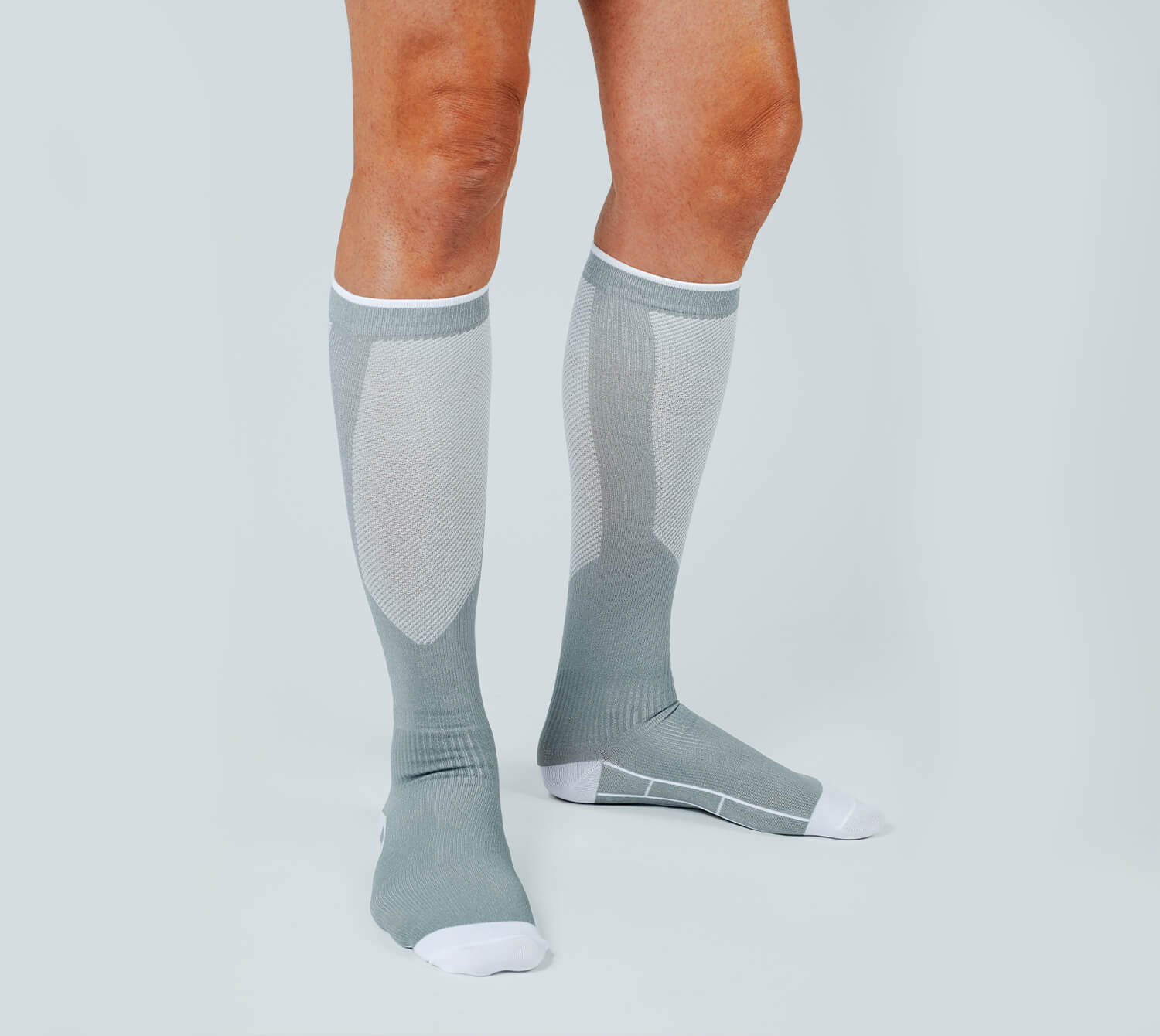
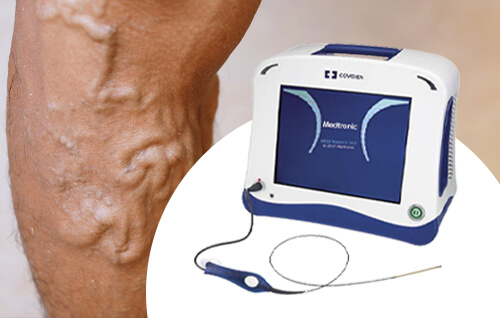
Clearing spider veins is quick and done in-office. When reflux is driving them, we treat the source too, so they don't simply return.
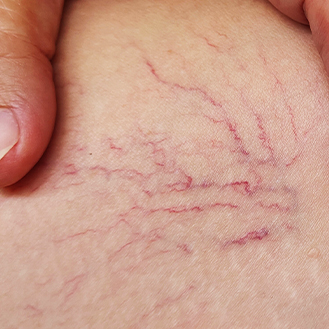
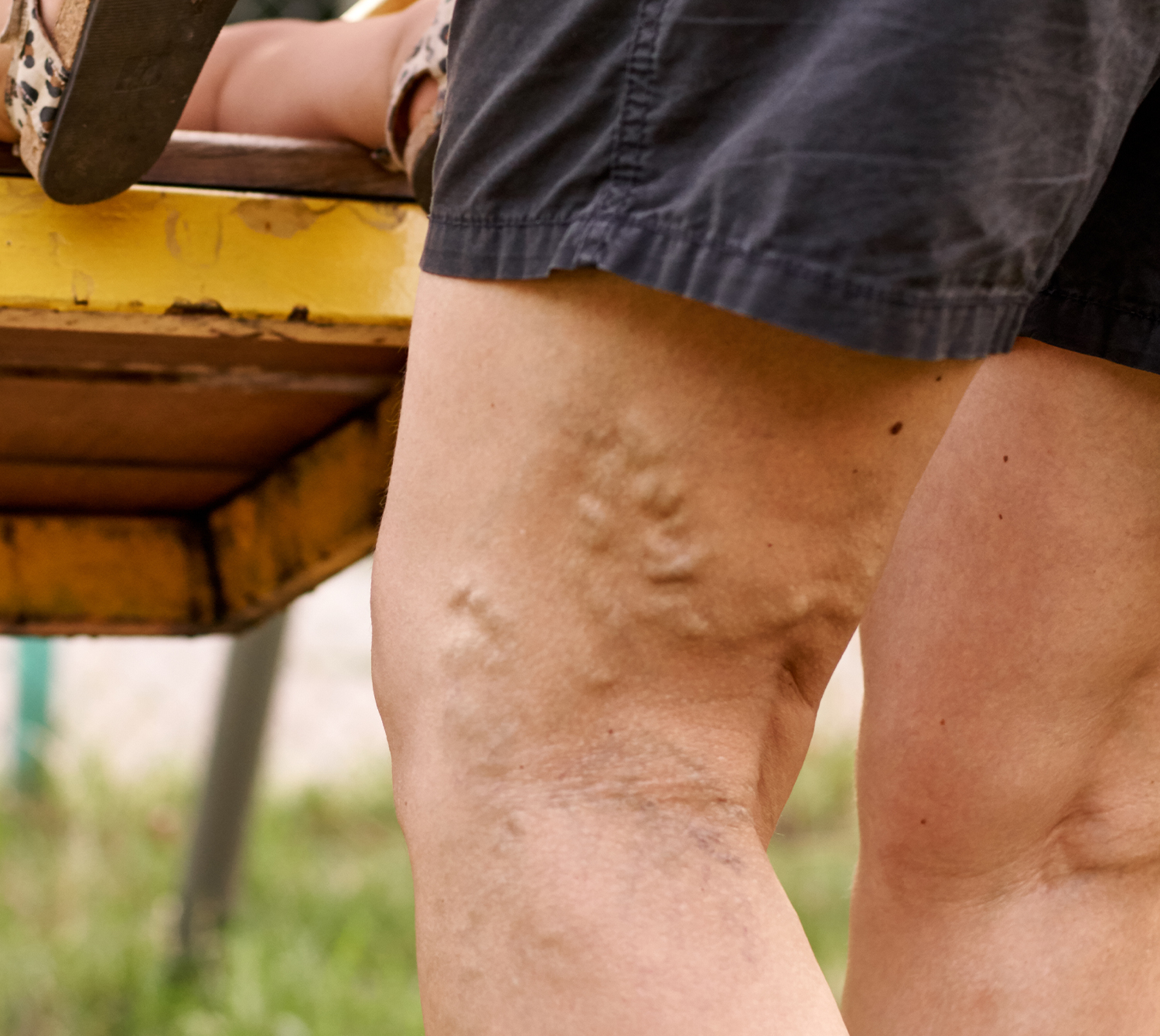
Do your veins look like this?
Those may be varicose veins, larger, raised, rope-like veins that bulge above the skin. They often point to underlying reflux and can be treated for lasting relief. See how we treat them.
Spider vein questions, answered
The things patients ask us most before getting started.
On their own, spider veins are usually harmless, mostly a cosmetic concern. But they can be an early sign of underlying venous reflux (chronic venous insufficiency). That's why it's worth having them looked at, especially if your legs ache, swell, or feel heavy. A quick screening tells you whether anything deeper is going on.
No. The small damaged vessels don't repair themselves, so spider veins tend to stay and new ones can appear over time. The good news is that treatment, usually sclerotherapy or laser, clears them, with most veins fading over three to six weeks.
Very little. Sclerotherapy feels like a small pinch and mild sting from a very fine needle, and laser treatment feels like a quick, light snap. No anesthesia is needed, and most patients walk out and return to normal activity the same day.
When treatment is purely cosmetic, it usually isn't covered. But if you have symptoms or an underlying venous reflux problem, the medically necessary part of your care is often covered, including by Medicare. If your screening finds a medical cause, we check your benefits and go over any cost with you first.
The veins we treat are closed for good and won't reopen. Because the tendency to form them doesn't disappear, new spider veins can develop over the years, especially if an underlying reflux problem isn't addressed. Treating the source, when one is found, lowers the chance they return.
It depends on how many veins you have. Many areas clear in one to three sclerotherapy sessions spaced a few weeks apart. Your specialist gives you a realistic estimate after looking at your legs at your first visit.
Insurance
When your veins cause symptoms like aching, swelling, or skin changes, treatment is typically considered medically necessary, including under Medicare. We'll help you verify your benefits.
Most major plans accepted






Locations
Care close to home across the Inland Empire, High Desert, and Coachella Valley. Every office has on-site ultrasound.
High Desert
Coachella Valley
See what's behind your spider veins.
Start with a free vein screening, a quick, painless look and a clear plan, at any of our 6 Southern California offices.