




What is knee osteoarthritis?
Knee osteoarthritis develops when cartilage and other tissues inside the knee gradually change over time. As the protective cartilage becomes thinner, the joint can become inflamed, causing pain, swelling, and stiffness.
That inflammation is more than a side effect, it can keep the knee hurting on its own. Here’s how, and what we can do about it.
Why does knee arthritis hurt?
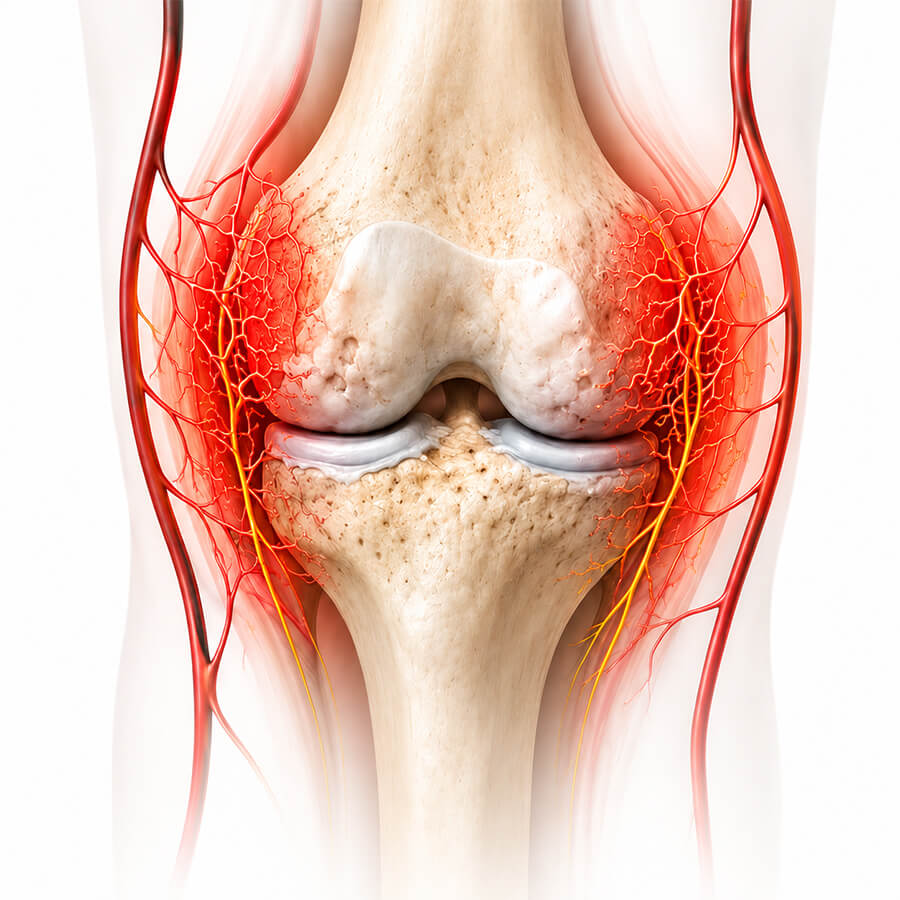
Cartilage damage is only part of the story. Osteoarthritis can cause ongoing inflammation inside the knee. In response, abnormal tiny blood vessels may grow into the inflamed tissue, often accompanied by new pain-sensitive nerves.
This can keep the cycle of inflammation and pain going.
GAE targets a source of the inflammation
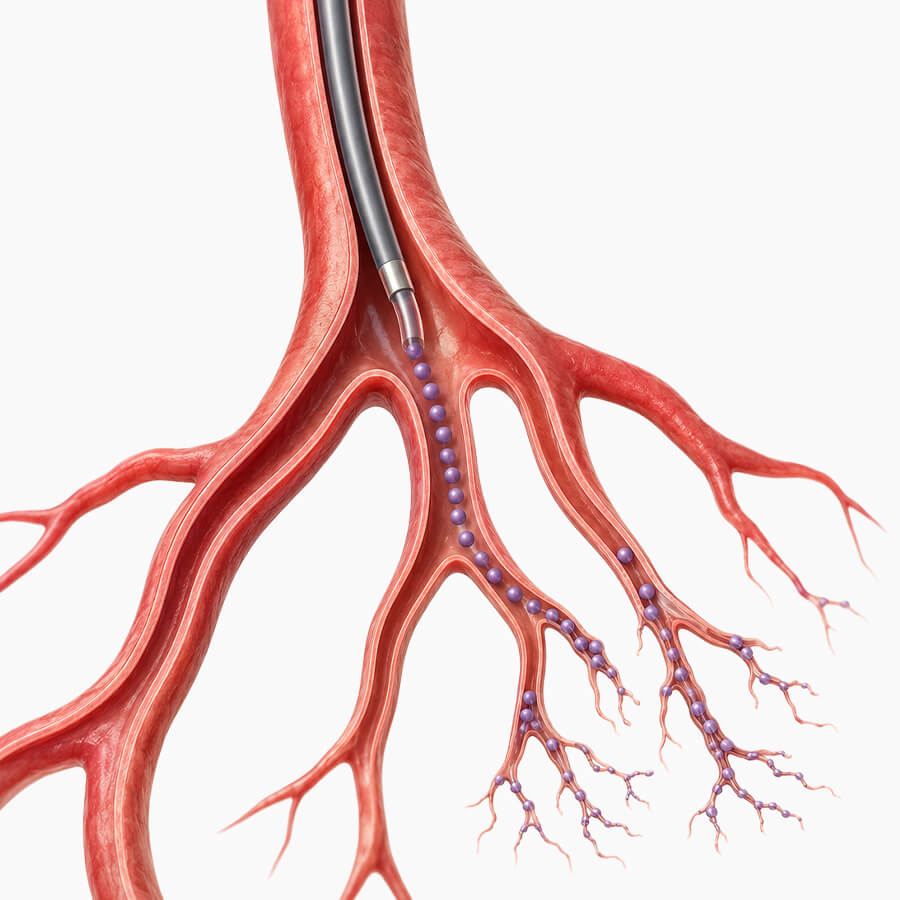
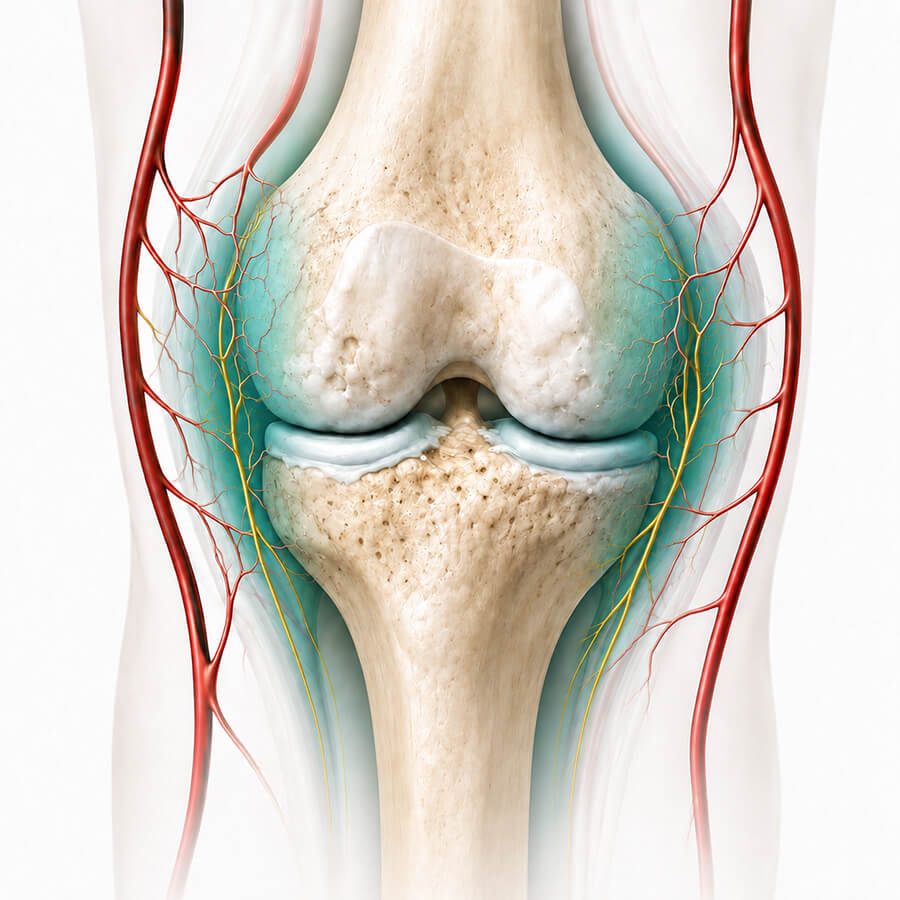
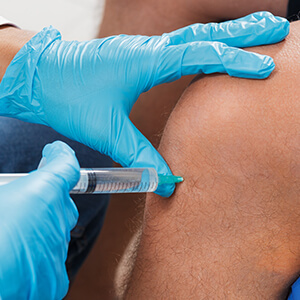
Genicular artery embolization, or GAE, carefully reduces blood flow to these abnormal vessels. This helps calm the inflammation and may significantly reduce knee pain without replacing the joint.
More about knee osteoarthritis
The background, if you want it. Open any section below.
Knee osteoarthritis is usually more than a passing ache. Most patients notice some mix of the following, often worse after activity and easier with rest.
Pain & stiffness
Aches with pressure, movement, or even at rest · Stiff first thing in the morning or after sitting · Harder to walk, climb stairs, squat, or kneel
Swelling & sound
The knee looks puffy or feels swollen · A cracking or grinding sound when you move it · Warmth or tenderness around the joint
Instability
The knee feels wobbly, like it could “give out” · It locks up or feels stuck when you move · Weakness that makes you favor the other leg
Knee osteoarthritis develops from a combination of age, genetics, previous injuries, joint alignment, and years of stress on the knee. Having a risk factor doesn't mean you'll develop it, but a few things make it more likely.
Extra weight
A past knee injury
Repetitive stress
Family history
Joint alignment
Age
Osteoarthritis advances in four broad stages. Knowing where you are helps you and your doctor plan ahead.
Minor
Early changes are visible, but most people have few or no symptoms.
Mild
Pain and stiffness begin, often after activity, but there's still enough cartilage to keep the bones apart.
Moderate
Cartilage has thinned noticeably. Pain is more frequent with walking, squatting, or kneeling, and stiffness lingers.
Severe
The joint space is greatly reduced, with advanced cartilage loss, stiffness, and more persistent pain. Surgery may be considered.
A short, straightforward visit, no guesswork about what's causing your knee pain.
A hands-on exam
A knee X-ray
MRI or CT, if needed
How knee osteoarthritis is treated
Care usually starts simple and steps up only as needed. Most people ease pain and stay active for years without surgery.
Everyday care
Injections
Genicular artery embolization (GAE)
An image-guided treatment that reduces blood flow to the abnormal vessels associated with inflammation and knee pain. It treats an important source of the pain without removing or replacing the knee joint.
Surgery
Not sure where you land? Let’s talk it through.
Give our team a call and we’ll help you find the right next step for your knee, including whether GAE is an option for you. No pressure, just answers.
Why Empire Vein for GAE
Experience matters with GAE
GAE is a highly specialized vascular procedure. It requires identifying the abnormal blood vessels and treating them precisely while protecting the healthy circulation around the knee. Empire Vein & Vascular has one of Southern California’s most experienced GAE teams, with more than 800 procedures performed.
800+
GAE procedures performed
Fellowship-trained
Vascular specialists
6 offices
Across Southern California
Compare your knee options
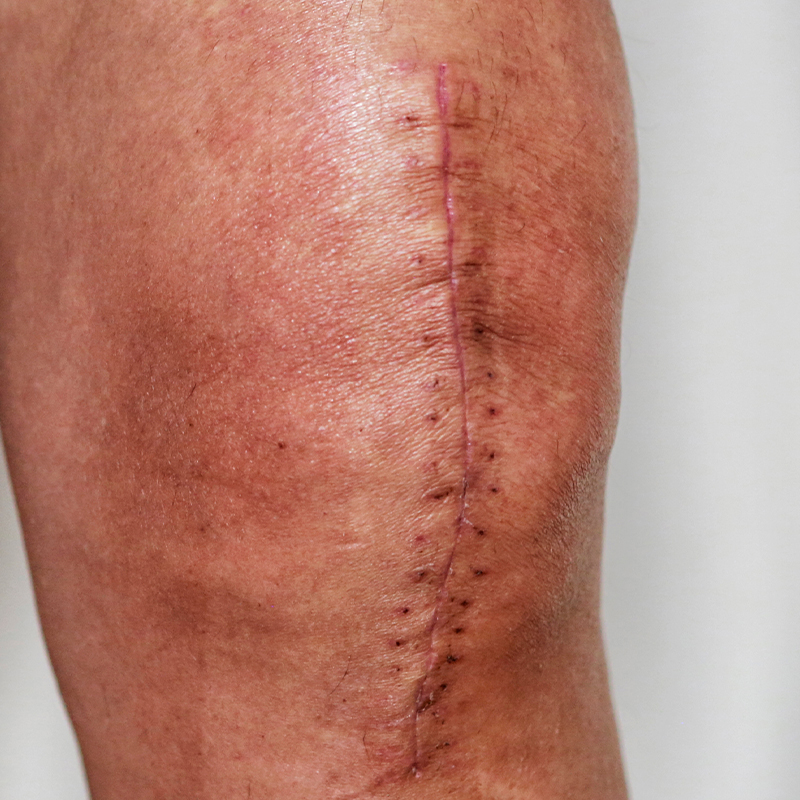
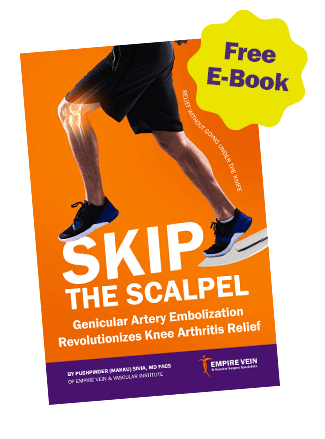
Free patient guide
Skip the Scalpel
Our plain-language guide to easing knee arthritis pain without surgery: what GAE is, who makes a good candidate, what recovery really looks like, and the questions worth asking your doctor.
Download the guideKnee osteoarthritis questions, answered
The things patients ask us most about knee arthritis, the vessels behind the pain, and GAE.
An arthritic knee is often a chronically inflamed knee. The body responds by sprouting tiny new blood vessels in the joint lining, and new nerve endings tend to follow. More vessels, more inflammation, more pain.
GAE uses a very small catheter to reach the arteries around the knee. Tiny particles are delivered precisely to reduce blood flow to the abnormal vessels while preserving the knee's healthy circulation. Quieting that overactive blood supply calms the inflammation, and with it, the pain.
Approximately 80% of our patients experience a 50% or greater reduction in knee pain after GAE. Results vary, and some patients experience even greater relief.
No. GAE does not regrow cartilage or cure osteoarthritis. It treats an important source of inflammation and pain, which may help patients move more comfortably and return to the activities they enjoy.
GAE may be appropriate for people with persistent knee pain from osteoarthritis who have not received enough relief from medications, physical therapy, or injections. It's also worth discussing if you want to delay knee replacement or aren't a good surgical candidate. A consultation and a review of your imaging will help us determine whether GAE is right for you.
Results vary, but many patients experience meaningful pain relief for two years or longer. Some patients may have relief for several years. Every knee is different, so we cannot guarantee how long an individual patient's results will last.
All patients go home a few hours after the procedure. Most return to normal daily activities within one or two days. Strenuous exercise and heavy activity should be avoided for several days.
Coverage is expanding as GAE becomes more established, and many plans, including Medicare, IEHP, and most PPOs, cover it for the right candidate. Our team verifies your benefits before anything is scheduled, so you know where you stand up front.
GAE may help some patients reduce their pain and delay or avoid knee replacement. It is not a substitute for surgery when surgery is medically necessary. Having GAE also does not prevent someone from undergoing knee replacement later if needed.
There's no cure yet, but it's very manageable. The goal of treatment is to relieve pain, keep you moving, and slow the wear, so you can stay active and often avoid or delay surgery.
If knee pain lasts, keeps returning, or starts limiting everyday activities, it's worth getting checked. Osteoarthritis develops slowly, and the earlier it's caught, the more options you have.
Insurance
Insurance coverage for GAE varies by health plan. We accept IEHP, Medicare, and most PPO and HMO plans. Our team will verify your benefits and explain your coverage before treatment.
Most major plans accepted






Locations
Knee pain consultations are available at multiple locations across Southern California. Our team will evaluate your symptoms, review your imaging, and determine whether GAE may be appropriate for you.
High Desert
Coachella Valley
Knee pain slowing you down?
Talk with our team about whether a minimally invasive option like GAE could help you avoid or delay surgery.