


What is compression therapy?
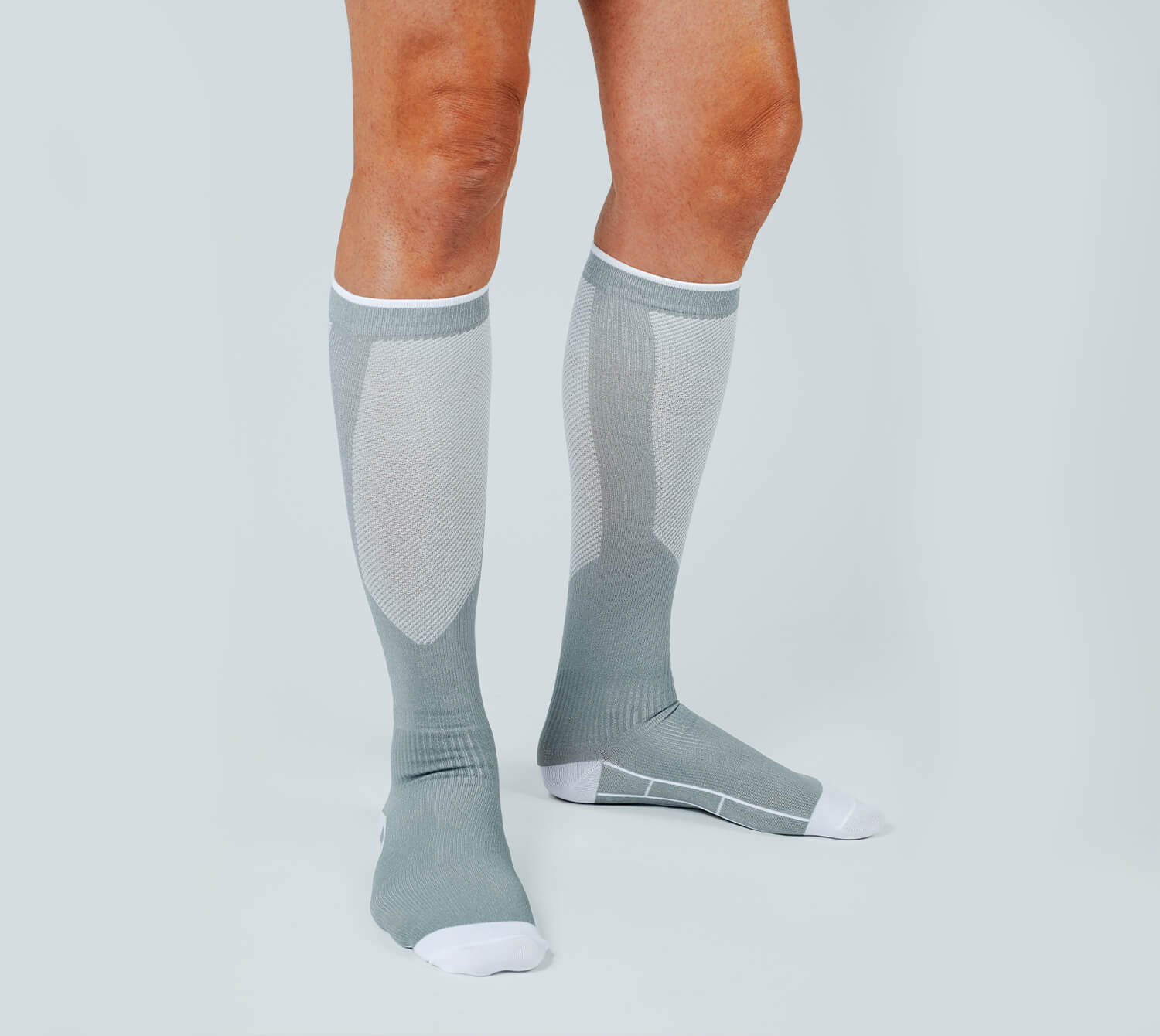
Compression therapy uses snug-fitting medical stockings to apply steady, graduated pressure to the legs. The pressure is firmest at the foot and ankle and eases gradually up the leg, which helps push blood back up toward the heart instead of letting it pool.
That pooling is what causes the heaviness, swelling, and cramping many people feel with varicose veins. Improve the flow, and those symptoms often ease. It works best when the stocking is properly fitted, which is why guidance matters.
Keeps blood moving
Gentle and reversible
A smart starting point
Finding the right compression level
Pressure is measured in millimeters of mercury (mmHg). The right level depends on your symptoms. Here's a quick guide.

When compression can help
Compression therapy is especially useful as a first step, or alongside other care, for conditions tied to poor circulation in the legs.
Painful varicose veins
Eases the pain and swelling that visible varicose veins can cause day to day.
Venous insufficiency
Helps blood move back up the leg when valves no longer do the job efficiently.
After a vein procedure
Often worn for a short time after sclerotherapy or vein closure to reduce swelling and support healing.
Swelling & skin changes
Can help with ankle and lower-leg swelling, and the skin changes that come with advanced venous disease.
Why patients like it
Compression questions, answered
The things patients ask us most about compression therapy.
They're made of strong elastic that's snuggest at the foot and ankle and eases as it goes up the leg. That graduated pressure gently pushes pooled blood back up toward the heart, which reduces swelling and the heaviness and cramping that come with varicose veins.
It depends on your symptoms. Low compression (under 20 mmHg) is available over the counter for everyday support. Medium (20–30 mmHg) and high (over 30 mmHg) should be used under a physician's guidance. A proper fitting matters: too tight is uncomfortable, and too loose won't work.
No. Compression manages symptoms and supports circulation, but it doesn't fix the underlying damaged veins. If you can't tolerate it or your symptoms persist, minimally invasive options like VenaSeal can treat the root cause and may free you from wearing stockings.
Compression stockings can be worn any time your feet aren't elevated, typically during the day. Your doctor will give you a routine based on your symptoms or your recovery after a procedure.
Yes. Compression can help people who aren't candidates for a procedure because of illness or other complications. It can give real symptom relief without anything invasive.
Coverage varies by plan and whether they're considered medically necessary. We'll talk through your options at your free vein screening and help you understand any costs up front.
Not sure where to start?
A free vein screening is a quick, painless visit that tells us whether compression alone is enough or whether more could help. Visit any of our 6 Southern California offices.