

Does every step feel like a chore as you go through your day? That heavy feeling in your legs is a common struggle for many adults, but it isn’t something you have to accept as a normal part of aging or a busy lifestyle.
What Does It Mean When Your Legs Feel Heavy and Tired?
This usually means your muscles or blood vessels are working harder than they should. The feeling can come and go, or it may be something you notice every single day.
The sensation itself can range from mild fatigue to a deep, pressure-like feeling that makes moving around feel like work. It may be accompanied by swelling, cramping, restlessness, or visible changes in the skin of the lower legs.
Common Causes
Several everyday factors, and some underlying health conditions, can be responsible.
Standing or Sitting for Long Periods
Staying in one position for hours puts pressure on your leg veins. Blood begins to pool, leading to that heavy feeling in the legs many people notice after a long workday. The same applies to extended sitting, when your legs are not moving, your calf muscles cannot pump blood back toward the heart effectively.
Physical Overexertion
Pushing your muscles too hard, whether at the gym or a demanding shift at work, can leave your legs feeling heavy and worn out. When your muscle energy stores are depleted, it triggers a direct sensation of heaviness and fatigue, making even simple movements feel like an effort. [1]
Dehydration and Electrolyte Imbalance
Dehydration reduces blood flow to muscles and limits the delivery of oxygen and nutrients your legs need. Dehydration and electrolyte loss can trigger muscle fatigue and cramping in the lower extremities. Minerals like sodium, potassium, and magnesium all play a role in how your muscles contract and recover. [2]
Excess Body Weight
Carrying extra weight places an added load on your legs and veins. Over time, this reduces circulation efficiency, contributes to a persistent heavy feeling in the legs, and increases the risk of developing venous disease.
Pregnancy
Hormonal changes and increased blood volume during pregnancy can weaken the valves in leg veins. This often causes swelling, aching, and a heavy feeling in the legs, particularly in the second and third trimesters.
When Heavy Legs May Be a Circulation Issue
Sometimes, legs feeling heavy and tired has nothing to do with lifestyle. It is about your veins or arteries.
Chronic Venous Insufficiency (CVI)
CVI occurs when the valves inside your leg veins stop working properly, causing blood to pool in the lower legs instead of returning to the heart. Limb heaviness is a recognized symptom of CVI, alongside pain, swelling, skin discoloration, and varicose veins.
Varicose Veins
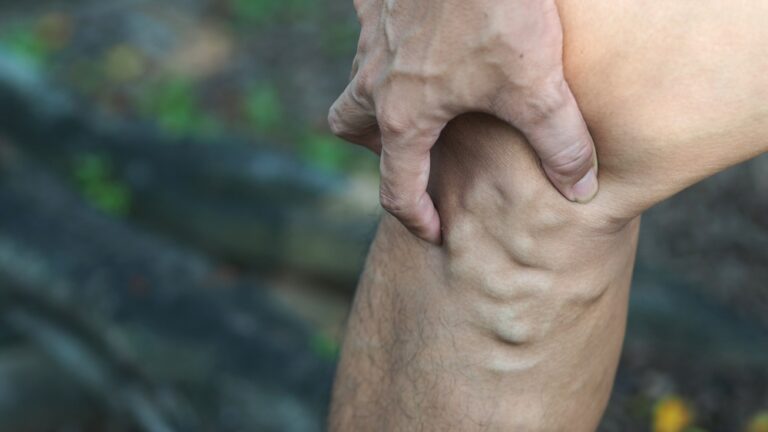
Varicose veins are enlarged, twisted veins just beneath the skin, a visible sign that vein valves are not functioning properly. Many people treat them as cosmetic, but they can cause aching, fatigue, swelling, and a sensation of heavy and tired legs, especially after prolonged standing or sitting.
Peripheral Artery Disease (PAD)
PAD occurs when the arteries that carry blood to the legs narrow due to plaque buildup. Reduced blood flow causes cramping, fatigue, and heaviness, especially during walking or climbing stairs. Because PAD reflects widespread arterial disease, it is an early signal of cardiovascular risk that warrants prompt evaluation.
Restless Leg Syndrome (RLS)
RLS is a neurological condition causing an uncomfortable urge to move the legs, often described as aching, throbbing, or crawling. Symptoms typically worsen at rest, especially in the evening and at night. [3]
When Should You Be Concerned About Heavy Legs?
Consider these signs if you’re concerned about heavy legs:
- Aching or cramping that does not ease with rest
- Heaviness or swelling that worsens throughout the day
- Fatigue in your legs even without much physical activity
- Restless legs, especially at night
- Skin changes, such as darkening or thickening around the ankle
- Visible varicose or spider veins
- Open wounds or sores on the lower leg
While occasional heaviness is common, persistent fatigue in your legs warrants a professional evaluation. Speaking with a vascular specialist can help manage symptoms and prevent future complications.
How to Relieve Heavy and Tired Legs
The right approach depends on what is causing the problem. Here are several steps that can help, ranging from simple daily habits to professional medical care.
Move More Throughout the Day
Short walks and regular movement help keep blood circulating in your legs. If you sit or stand for long periods, take breaks every 30 to 60 minutes to stretch and walk briefly. Even small amounts of movement can make a meaningful difference in how your legs feel by the end of the day.
Elevate Your Legs
Propping your legs above heart level while resting allows gravity to help blood flow back toward the heart. Even a few minutes of leg elevation in the evening can relieve that heavy feeling in the legs that builds up throughout the day.
Wear Compression Socks
Snug compression socks apply gentle pressure to the lower leg, supporting the veins and encouraging blood to flow upward. Many people find significant relief with regular use, especially when standing or traveling for extended periods.
Stay Hydrated
Drinking enough water supports healthy blood volume and muscle function. Staying well-hydrated helps reduce the risk of muscle fatigue and cramping that contribute to the sensation of heavy, tired legs.
Maintain a Healthy Weight
Reducing excess body weight takes pressure off your veins and legs. Even modest weight loss can lead to noticeable improvements in how your legs feel day to day.
Seek Professional Vascular Care
If lifestyle changes are not providing enough relief, or if your symptoms are consistent with a circulation problem, it is time to seek a professional evaluation. A vascular specialist can assess your veins and arteries and recommend treatment.
Treatment options include:
- VenaSeal™: Uses a medical-grade adhesive to permanently seal diseased veins.
- ClosureFast™: Uses radiofrequency (heat) energy to collapse and close the vein wall.
These procedures are minimally invasive, performed in an outpatient setting, and come with little to no downtime.
Schedule Your Free Vein Screening
Persistent heaviness isn’t something you just have to accept. At Empire Vein & Vascular Specialists, our board-certified specialists determine the cause of your symptoms and create a personalized plan that meets your needs.
As the nation’s leading provider of VenaSeal™, we specialize in advanced, minimally invasive treatments tailored to your specific symptoms. Our Intersocietal Accreditation Commission (IAC) accreditation ensures you receive the highest standard of diagnostic accuracy and care.
Schedule your free vein screening today at any of our convenient Southern California locations. Gain a clear understanding of your vein health with no pressure or obligation. We accept most insurance plans, including Medicare, IEHP, and most PPOs and HMOs.
Call us at 1-800-VARICOSE (1-800-827-4267) or visit us online to book your free vein screening.
References
[1] https://pmc.ncbi.nlm.nih.gov/articles/PMC3435910/
[2] https://www.ncbi.nlm.nih.gov/books/NBK499895/
[3] https://www.ninds.nih.gov/health-information/disorders/restless-legs-syndrome