



What is an atherectomy?
Atherectomy is a minimally invasive procedure that physically removes plaque from inside a narrowed artery. Using a specialized catheter (a thin tube), your vascular specialist cuts, shaves, or sands away the hardened plaque to reopen the vessel and restore healthy blood flow.
Think of it as a precision “Roto-Rooter” for your arteries: where angioplasty just pushes plaque aside with a balloon, atherectomy removes it from inside the artery, which matters most for hard, calcified blockages. And unlike open surgery, it's done through a tiny incision. It's most often used for peripheral artery disease in the legs.
It removes plaque, not just pushes it
Built for hard, calcified plaque
Often avoids a stent

Your atherectomy specialist
Advanced PAD care from a leader in vascular innovation
Dr. Pushpinder Sivia has performed more than 5,000 peripheral angiograms and advanced PAD interventions over 15 years, giving him extensive experience diagnosing and treating complex arterial blockages.
Atherectomy at Empire Vein & Vascular is performed personally by Dr. Sivia.
5,000+
PAD angiograms & interventions
15+
Years treating vascular disease
How it works
Atherectomy is an outpatient procedure: here's what to expect, start to finish.
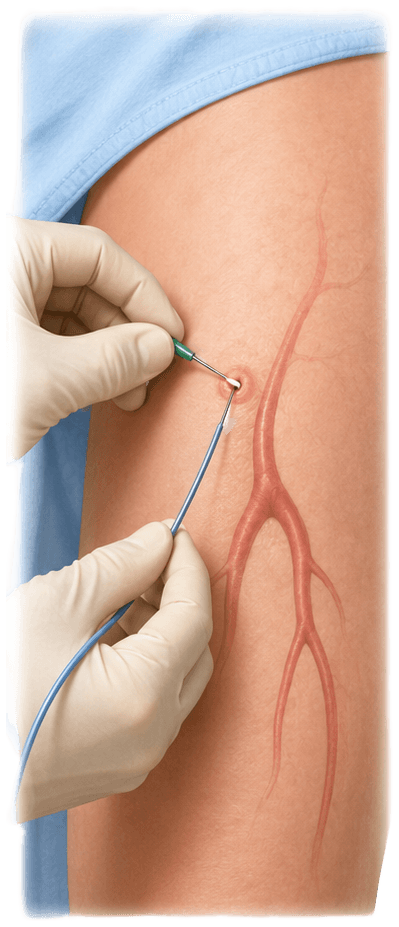
Sedation & access
Twilight sedation keeps you comfortable and relaxed while our team monitors you throughout. The catheter site, usually the groin, is cleaned and numbed, and a thin, flexible catheter is guided into the artery through a tiny incision.
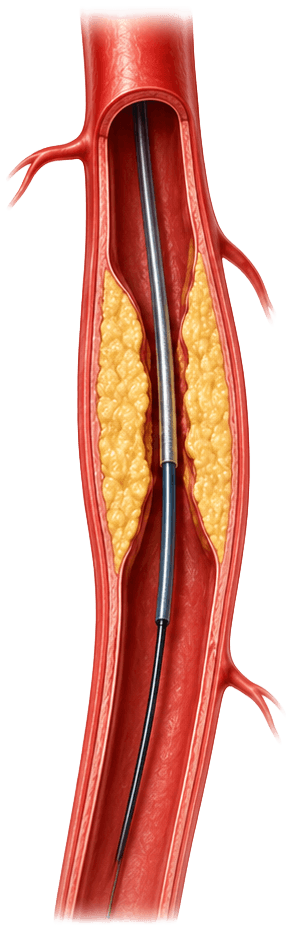
Finding the blockage
Live X-ray imaging (fluoroscopy) steers the catheter right to the narrowed spot.
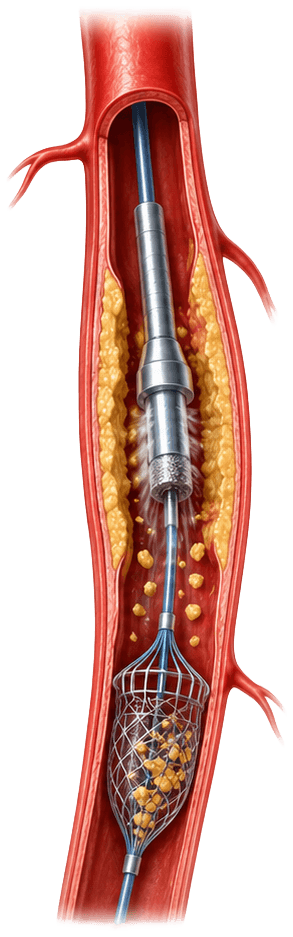
Clearing the plaque
A small device shaves or sands the plaque away, while a filter catches debris so it can't travel downstream.
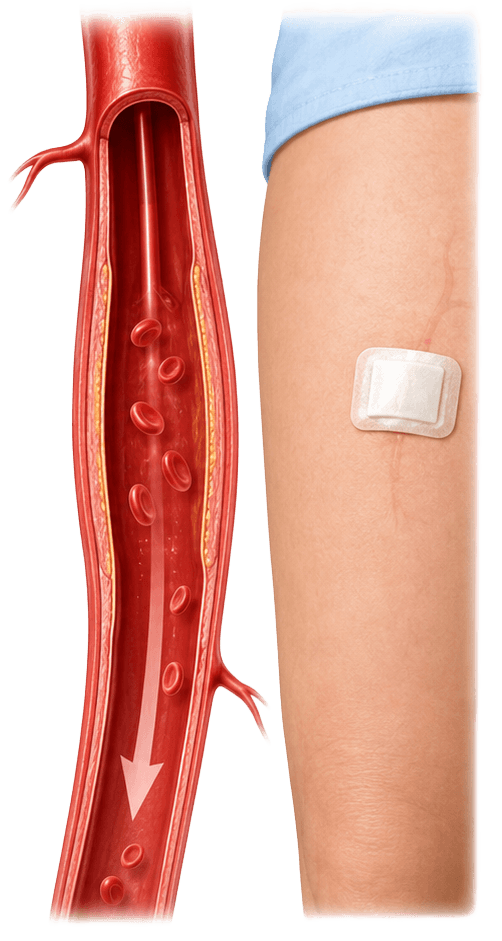
Checking flow & recovery
Your surgeon confirms blood is flowing well, then removes the catheter and closes the small incision. Most patients head home the same day and return to light activity within 24 to 48 hours.
A common concern
Does the plaque travel somewhere else?
No. The plaque is captured and removed during the procedure. It does not travel upstream to your heart or brain.
During atherectomy, specialized devices remove the blockage while protection systems capture debris, allowing the artery to be safely treated and blood flow restored.
Who's a candidate?
Atherectomy is especially helpful when a blockage is hard, calcified, long, or has come back after a previous treatment.
It may be right for you if you have
Especially if you're noticing
For heavily calcified arteries, atherectomy is often paired with intravascular lithotripsy (IVL), which cracks the calcium first. After a quick evaluation, we'll recommend the approach or combination that fits your blockage.
Why patients choose it
For the right blockage, atherectomy offers real advantages over both balloon angioplasty and open surgery.
Clears calcified plaque
Gentler on the artery
Often no stent needed
Minimally invasive
Quick recovery
Better circulation

Atherectomy, answered
The questions patients ask us most about the procedure.
Not in the traditional sense. Atherectomy is minimally invasive: it's done through a tiny incision using a catheter, rather than the large cut of open surgery. Most patients go home the same day.
You're given twilight sedation, so you're comfortable and relaxed while our team monitors you, and the catheter site is numbed. Most patients feel little during the procedure and only mild soreness at the incision site afterward.
Recovery is quick. Most patients rest for a few hours, go home the same day, and are back to light activity within 24 to 48 hours.
Angioplasty widens a narrowed artery by inflating a balloon, which pushes plaque aside. Atherectomy actually removes the plaque. That makes it especially useful for hard, calcified blockages, and it can reduce the need for a stent.
Serious complications are uncommon, but as with any artery procedure there are real risks: injury to the vessel wall, plaque fragments traveling downstream (a filter is used to catch them), bleeding at the incision site, and re-narrowing over time. Your surgeon reviews your personal risk with you before recommending it.
Sometimes atherectomy restores blood flow on its own; other times it's combined with angioplasty or a stent for the best result. Your vascular surgeon will explain what's right for your artery.
In most cases, yes. We accept most insurance, including Medicare, most PPOs and HMOs, and IEHP. Before anything is scheduled, we verify your benefits.
Insurance
When your veins cause symptoms like aching, swelling, or skin changes, treatment is typically considered medically necessary, including under Medicare. We'll help you verify your benefits.
Most major plans accepted






Locations
Care close to home across the Inland Empire, High Desert, and Coachella Valley. Every office has on-site ultrasound.
High Desert
Coachella Valley
Get your circulation flowing again.
Talk with our vascular specialists about whether atherectomy is right for you. Screening offered at all 6 of our Southern California offices.