



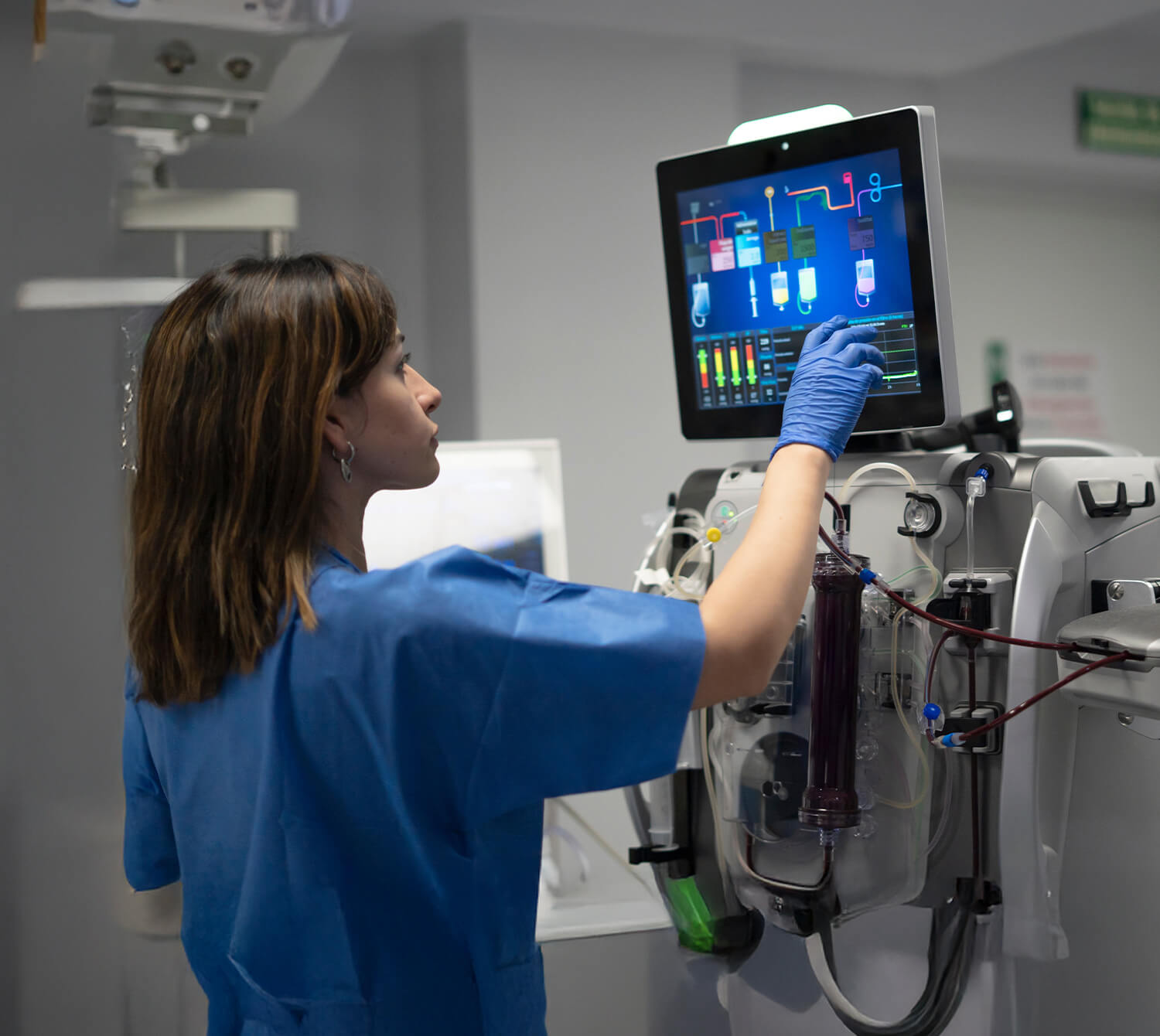
What is a dialysis fistula?
Hemodialysis works by drawing your blood out through a needle, filtering it through a machine, and returning it, usually a few times a week. That's a lot of needle punctures, and ordinary veins can't take it for long.
An AV fistula solves that. When we connect an artery to a nearby vein, the added pressure makes the vein grow thicker and stronger over a few weeks, creating a durable access point that stands up to regular dialysis and helps protect your other veins. When your veins aren't suitable, a soft synthetic tube called an AV graft does the same job.
Built to last
Lower infection risk
Fistula or graft

How it's created
Getting a fistula ready is a step-by-step process that starts well before your first dialysis session.
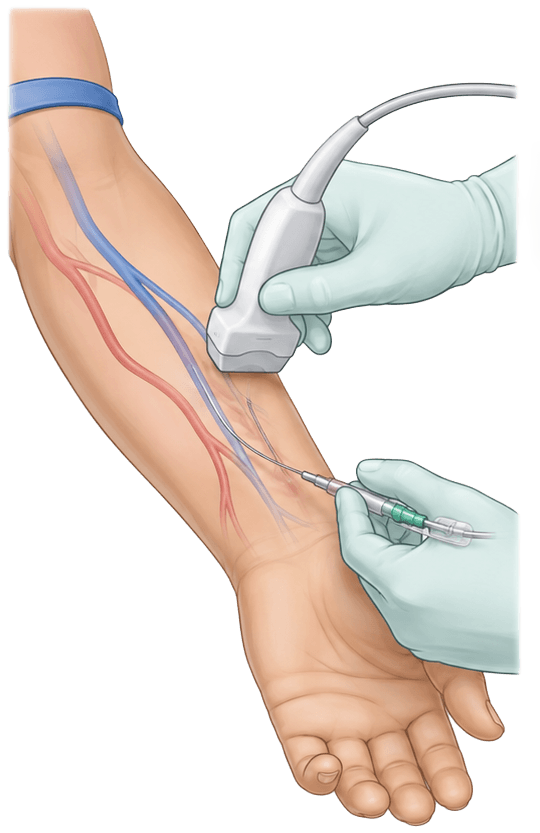
Mapping your veins
At your consultation, an ultrasound maps the veins in both arms to find the best one, usually in your non-dominant arm.
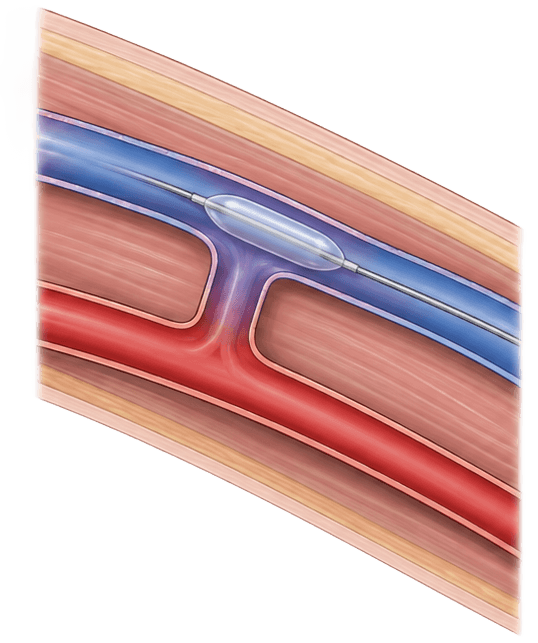
Connecting artery to vein
In a short procedure, your surgeon joins an artery to a nearby vein so stronger, high-pressure blood flows directly into it.
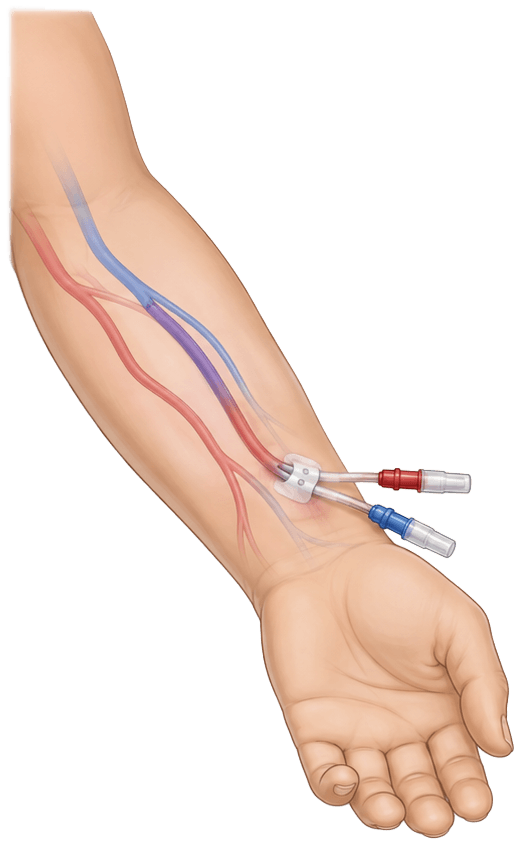
Ready for dialysis
By then the vein has grown thick and strong enough to comfortably handle dialysis needles, and it's used for every treatment, with no temporary catheter needed.
Caring for your access
A fistula or graft needs a little attention to keep working well. Feel for the gentle buzzing (the “thrill”) each day, and watch for these uncommon but important signs.
Let us know if you notice
Call us right away for
These are uncommon, but catching them early protects your access. Losing the “thrill” can mean blood flow has stopped. Call us promptly so we can restore it and keep your dialysis on track.
Why choose Empire Vein
The region's leading experts in dialysis access
Our fellowship-trained vascular surgeons don't just create your access. They keep it working. When a vein narrows, we treat it with a minimally invasive, outpatient procedure called a fistulogram so dialysis continues with little interruption.

1,157
dialysis fistulas created to date
523
AV grafts completed
4.8★
from 2,000+ verified patient reviews
6 offices
across Southern California
Dialysis access, answered
The questions patients ask us most about fistulas and grafts.
Ideally weeks to months before you start dialysis, because a fistula needs about six weeks to mature. Your kidney doctor (nephrologist) will recommend the timing based on your lab values and how your kidney function is trending.
Usually about six weeks, the time it takes for the vein to grow thicker and stronger so it can handle dialysis needles. A graft can sometimes be used a bit sooner.
A fistula connects your own artery and vein directly. A graft uses a soft synthetic tube to make the connection when your own veins aren't suitable. Both create reliable dialysis access, but a fistula is generally preferred when it's an option.
A fistula sits under the skin and lasts far longer, with a much lower risk of infection than a temporary dialysis catheter. Creating one early often avoids the need for a catheter altogether.
Feel for the gentle buzzing (the “thrill”) each day to confirm blood is flowing, keep the area clean, and avoid pressure, tight sleeves, or blood-pressure cuffs on that arm. Call us if anything changes.
Fistula surgery is routine, but complications can happen: a fistula that's slow to mature, narrowing or clotting, infection, or (uncommonly) steal syndrome, where the hand gets too little blood and feels cold or numb. We map your veins first to choose the strongest site, and we monitor the access afterward so problems are caught early.
Veins can narrow over time. We treat that with an outpatient procedure called a fistulogram. A small balloon (angioplasty) or a stent reopens the access, and your dialysis continues with minimal interruption.
Insurance
When your veins cause symptoms like aching, swelling, or skin changes, treatment is typically considered medically necessary, including under Medicare. We'll help you verify your benefits.
Most major plans accepted






Locations
Care close to home across the Inland Empire, High Desert, and Coachella Valley. Every office has on-site ultrasound.
High Desert
Coachella Valley
Dependable dialysis access, when you need it.
Talk with our vascular surgeons about planning your fistula ahead of dialysis. We see patients at all 6 of our Southern California offices.