


What is intravascular lithotripsy?
Intravascular lithotripsy (IVL), sometimes called shockwave lithotripsy, is a minimally invasive procedure built specifically to treat severely calcified arteries. A balloon catheter delivers pulsed sonic pressure waves that fracture the calcium hardening the vessel wall.
Hardened calcium is one of the toughest problems in peripheral artery disease (PAD): it can defeat a standard balloon. Using Shockwave IVL technology, we take a gentler approach: sonic pressure waves safely modify the calcium while sparing the vessel wall, so arteries that don't respond to traditional balloon angioplasty can finally open.
It cracks the calcium
It reaches deep calcium too
Borrowed from kidney-stone care
A common concern
Does the calcium travel somewhere else?
No. The calcium stays contained within the artery wall, and the fragments do not travel downstream.
IVL uses sonic pressure waves to fracture the calcium while minimizing injury to the vessel. The artery simply becomes flexible enough to open, with nothing released into your bloodstream.

How it works
IVL is a straightforward outpatient procedure: here's what to expect, start to finish.
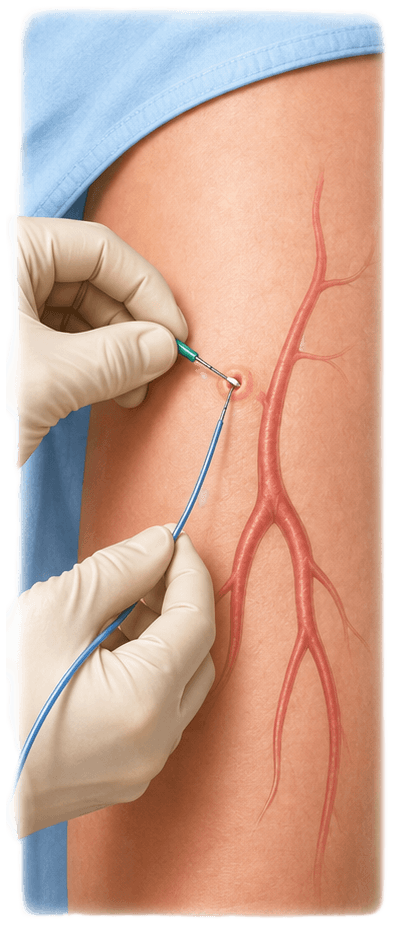
Numbed, then guided into place
The procedure is done under local anesthesia, usually with light sedation. Through a small puncture, often in the groin, a special balloon catheter is guided to the calcified spot using live X-ray imaging (fluoroscopy).
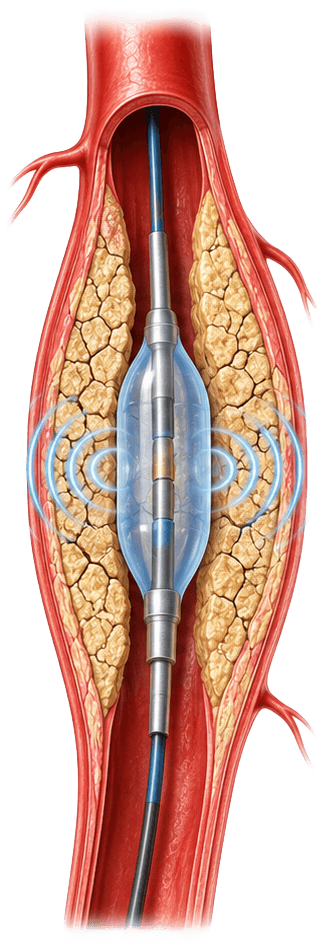
Sound waves crack the calcium
The balloon gently contacts the wall and sends out pulsed sonic pressure waves, fracturing the hard calcium into tiny pieces while sparing the soft, elastic vessel wall.
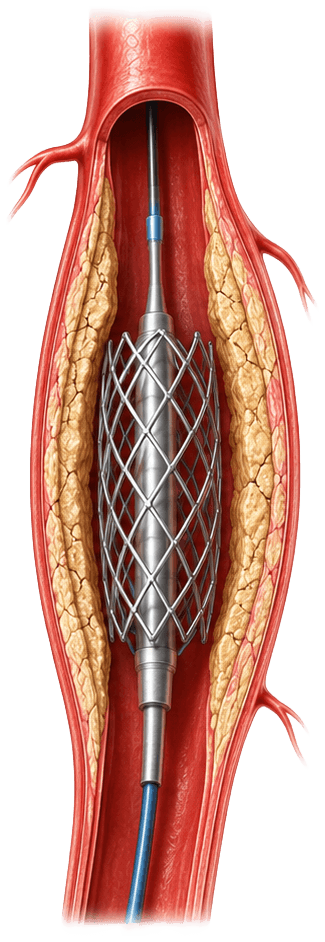
The artery opens
With the calcium cracked, the balloon fully expands the artery, often with a stent placed to keep it open.
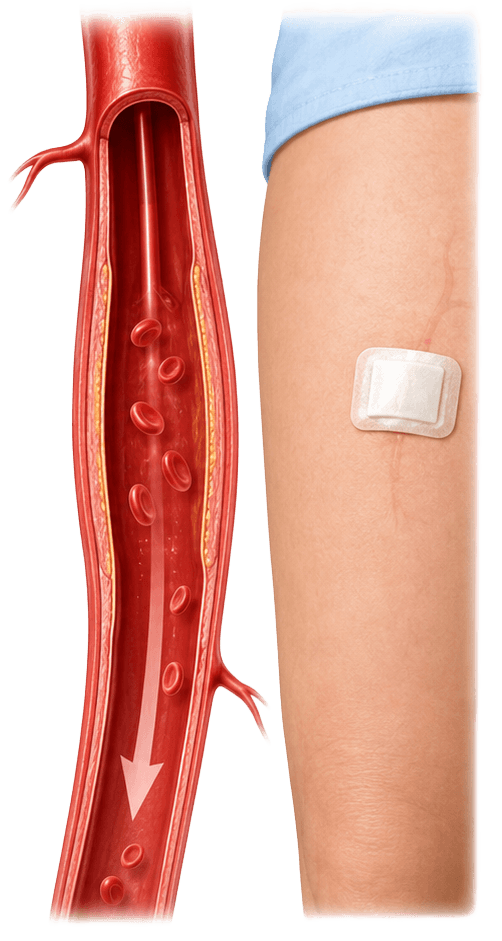
Home the same day
Imaging confirms the result, and most patients head home the same day with few restrictions.
Who's a candidate?
IVL is made for the hardest cases, arteries so calcified that a balloon or stent alone can't open them.
IVL may be right for you if you have
Especially if PAD is causing
IVL is often used alongside angioplasty and a stent. After imaging your arteries, we'll recommend whether IVL, atherectomy, or a combination is the best fit for you.
Why patients choose it
For heavily calcified arteries, IVL offers real advantages over high-pressure angioplasty and open surgery.
Safer for fragile arteries
Cracks stubborn calcium
Minimally invasive
Better blood flow
Works on tough blockages
Pairs with other treatments
Why choose Empire Vein
A leading provider of advanced IVL in Southern California
We bring the newest calcium-modifying technology to patients who once had no good options, treating even severe calcification through a small, minimally invasive procedure. You'll get clear guidance every step of the way.

20+ years
serving Southern California
45,000+
procedures performed across our practice
Same-day
outpatient procedure, home the same day
4.8★
from 2,000+ verified patient reviews
Intravascular lithotripsy, answered
The questions patients ask us most about the procedure.
IVL treats severely calcified arteries, where hardened calcium makes standard angioplasty or stenting difficult. It's most often used for peripheral artery disease in the legs, especially when a blockage is too hard for a balloon alone to open.
It uses pulsed sonic pressure waves (the same principle behind kidney-stone treatment) delivered by a balloon catheter. The waves crack hardened calcium into tiny fragments while sparing the soft, healthy vessel wall, so the artery can expand.
It stays where it is. Unlike treatments that cut plaque out, IVL leaves the cracked calcium in place within the artery wall, so the fragments aren't released into your bloodstream to travel downstream. The artery simply becomes flexible enough to open.
No, it's minimally invasive. It's done through a small catheter under local anesthesia, and most patients are awake with light sedation and go home the same day.
Atherectomy physically shaves or removes plaque from the artery. IVL instead cracks hardened calcium with sound waves so the vessel can expand, which is especially useful for heavily calcified blockages. Sometimes the two are used together, and a stent may follow.
Most patients feel little. The area is numbed with local anesthesia, you're kept comfortable with optional sedation, and any soreness afterward is usually mild.
IVL has been studied in the Disrupt PAD clinical trials, including the randomized Disrupt PAD III study, and is FDA-cleared for treating calcified peripheral arteries. Risks are uncommon but real: injury to the vessel, bleeding at the access site, and re-narrowing over time. Your surgeon will review your personal risks and whether IVL fits your anatomy before recommending it.
In most cases, yes. We accept Medicare, IEHP, PPOs, HMOs, and many other insurance plans, and we verify your benefits before anything is scheduled.
Insurance
When your veins cause symptoms like aching, swelling, or skin changes, treatment is typically considered medically necessary, including under Medicare. We'll help you verify your benefits.
Most major plans accepted






Locations
Care close to home across the Inland Empire, High Desert, and Coachella Valley. Every office has on-site ultrasound.
High Desert
Coachella Valley
Even hardened arteries have options.
Talk with our vascular specialists about whether intravascular lithotripsy is right for you. Screening offered at all 6 of our Southern California offices.