

Knee osteoarthritis can make everyday activities painful. Walking through a grocery store, climbing stairs, or getting out of a chair may become difficult. When medications, physical therapy, and injections no longer provide enough relief, you may wonder what comes next. Understanding how your options differ can help you decide on the right treatment.
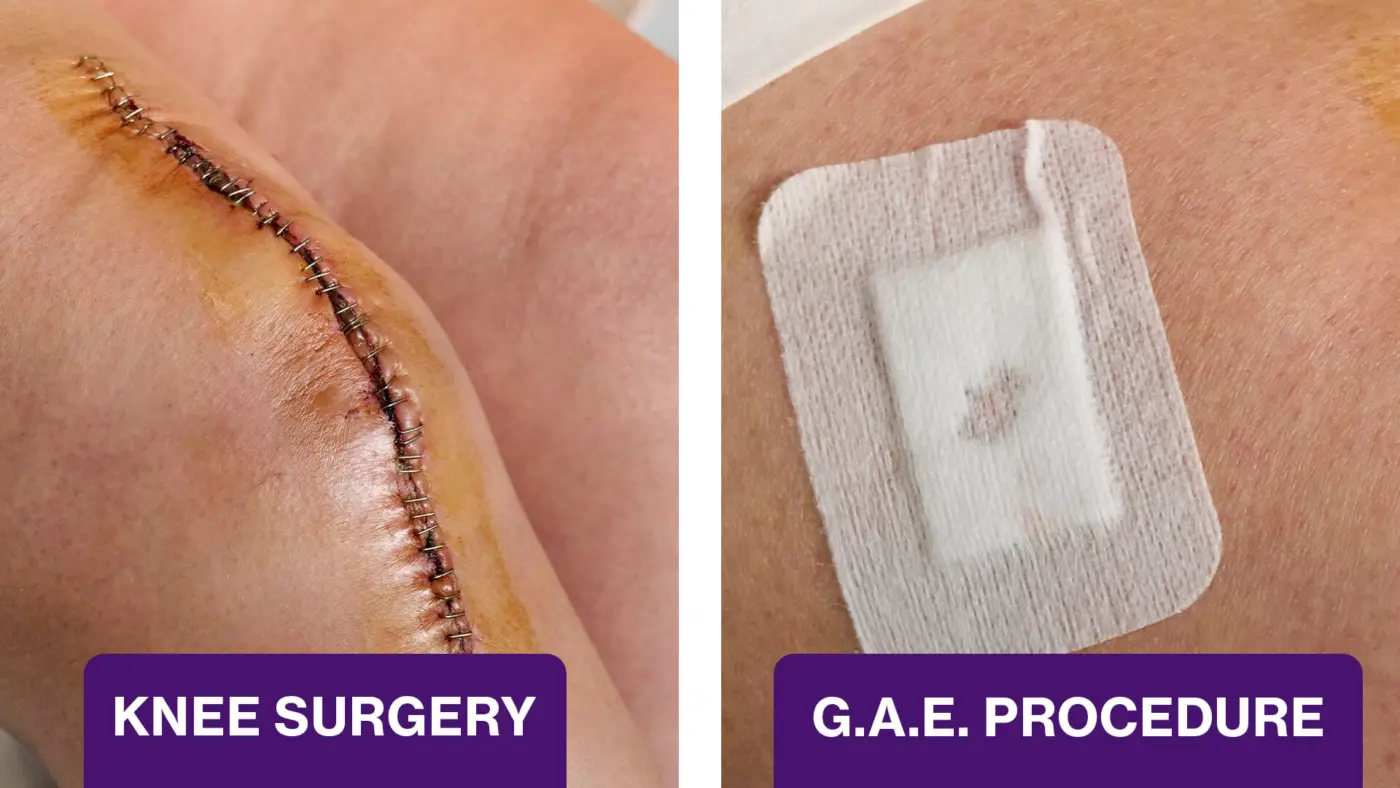
When comparing GAE vs. knee replacement surgery, one important difference is whether your natural knee joint stays intact. Genicular artery embolization (GAE) is a minimally invasive treatment that targets inflammation-related pain without replacing any part of your knee.
During GAE for knee arthritis, a specialist guides a thin catheter through an artery toward your knee. The procedure delivers tiny particles to block small blood vessels linked to inflammation. This may help reduce pain and improve knee function while preserving your natural joint. Although GAE doesn’t repair cartilage or reverse arthritis, knee replacement remains an option if needed.
Knee replacement surgery, in contrast, removes damaged bone and cartilage from the joint and replaces them with artificial parts designed to reduce pain and improve movement.
Who Is a Candidate for Each Treatment?
If knee pain is interfering with your daily life, the right treatment depends on your arthritis severity, overall health, and past treatments. A specialist can review your symptoms and imaging to help you determine the next step. [1]
GAE may be a good option if you:
- Have mild to moderate knee osteoarthritis that causes pain.
- Continue to experience pain despite trying exercise, medications, or injections.
- Want to delay knee replacement or aren’t a good candidate for surgery.
- Prefer a minimally invasive treatment that preserves your natural knee.
Knee replacement may be a better option if you:
- Have advanced arthritis with significant joint damage.
- Struggle with everyday activities because of severe knee pain or stiffness.
- Haven’t found enough relief from nonsurgical treatments.
- Are healthy enough to undergo surgery and complete rehabilitation.
If you’re exploring knee replacement alternatives, you don’t have to figure it out on your own. A specialist can help you understand your options and choose a treatment that fits your needs and goals.
How Do Recovery Times Compare?
GAE typically has a shorter recovery time, so you can return to your daily routine sooner. The GAE procedure uses a local numbing agent to keep you comfortable. It’s usually performed on an outpatient basis, so you can go home the same day. You may have mild bruising where the catheter was inserted, along with temporary soreness, warmth, or slight swelling around your knee.

Most people can resume light activities within a few days, although heavy lifting or strenuous exercise may need to wait. Knee pain may gradually improve over the following weeks.
Knee replacement requires more recovery time. You’ll usually start walking with help shortly after surgery, but regaining strength and mobility takes time. You may need a walker or cane at first, along with physical therapy to help your knee heal and move more comfortably. Many people return to everyday activities within several weeks, although full recovery can take several months.
How Effective Are GAE and Knee Replacement?
GAE
Studies suggest GAE can help some people reduce knee pain and move more comfortably. Pain relief may last one year or longer, with some patients reporting improvements lasting two years or more. However, results vary, and researchers are still studying how well GAE works over time. [2]
The Society of Interventional Radiology supports GAE as an option for certain patients who haven’t found enough relief from nonsurgical treatments or want to delay knee replacement. [3]
Knee replacement
If you have advanced knee arthritis, knee replacement may offer longer-lasting relief. Most patients experience less pain and find everyday movements, such as walking and climbing stairs, easier after recovery. Artificial joints can last many years, although they may eventually wear out or loosen. [1]
If you want to preserve your natural knee, GAE may be an alternative to knee replacement worth discussing with a specialist. However, it hasn’t been shown to provide the same long-term benefits as knee replacement for advanced arthritis. [2]
What Are the Risks and Side Effects?
Because GAE is a catheter-based treatment and knee replacement is major surgery, each option has very different risks and side effects.
Possible GAE risks include:
- Bruising, bleeding, or discomfort where the catheter enters.
- Temporary skin discoloration or irritation.
- Reactions to contrast dye.
- Blood vessel injury or unintended reduction in blood flow to healthy tissue.
Serious complications are uncommon, but possible.
Possible knee replacement risks include:
- Infection around the incision or artificial joint.
- Blood clots in the legs or lungs.
- Persistent pain or stiffness.
- Nerve or blood vessel injury.
- Implant loosening or wear that may require another operation.
A specialist can determine how your age, overall health, and other conditions affect these risks. Neither procedure guarantees complete pain relief.
How Do Costs and Insurance Coverage Compare?
Cost should never keep you from exploring your options. What you pay depends on your specific insurance plan, the recommended procedure, and any applicable deductible or coinsurance. GAE is performed on an outpatient basis, so it’s often less expensive than knee replacement, though costs vary from person to person.
Insurance typically covers knee replacement when it is medically necessary. For GAE, coverage depends on your specific plan, so verify it in advance.
Empire Vein & Vascular Specialists accepts most insurance plans, including Medicare, IEHP, and most PPOs. Because GAE coverage varies by plan, our team will verify your benefits before your visit and explain what to expect.
Our board-certified specialists evaluate knee osteoarthritis and offer minimally invasive GAE for appropriate candidates. We can explain whether GAE may fit your needs or whether an orthopedic evaluation makes more sense.
Take the next step toward relief from knee pain. Call 1.800.VARICOSE (1-800-827-4267) or book a consultation to discuss your treatment options.