

You probably know that water is good for you. But did you know that skipping your daily water intake can quietly harm your veins?
It’s true. Dehydration and veins are more closely connected than most people realize. When your body doesn’t have enough fluid, your blood changes, your circulation suffers, and your veins work much harder. Over time, this can lead to serious problems, including a higher risk of dangerous blood clots. Here’s what you need to know.
Why Hydration Is Essential for Healthy Blood Flow
Blood is mostly water. Plasma, its liquid component, is about 90% water. That fluid keeps blood moving smoothly through your veins and arteries.
When you’re well hydrated, blood maintains a healthy thickness, making it easier for your heart to pump. Oxygen and nutrients reach tissues efficiently, and your veins remain flexible enough to handle normal blood pressure changes.
Proper hydration is one of the simplest and most effective ways to protect your veins. It supports smooth blood flow, reduces strain on vein walls, lowers the risk of clots, and helps prevent swelling and discomfort.
Good vein hydration isn’t just about satisfying thirst. It’s vital for keeping your circulatory system functioning as it should. [1]
How Dehydration Impacts Your Veins and Circulation
When you lose more fluid than you take in, your blood volume drops. Your body tries to compensate, but the effects on your veins can be significant. [2]
Blood Becomes Thicker
Dehydration directly raises whole blood viscosity. Thicker blood moves more slowly and puts extra pressure on your veins as it travels through them.
Circulation Slows Down
With less fluid in your bloodstream, blood doesn’t flow as easily, especially in the legs, where blood must travel upward against gravity to reach the heart.
Veins Lose Elasticity
Your vein walls need moisture to stay flexible. Dehydrated veins become stiffer and are more prone to damage and dysfunction. Even mild dehydration can impair the ability of blood vessels to dilate normally.
Your Heart Works Harder
To push thicker blood through narrowed or stiff vessels, your heart has to work harder. This can show up as an elevated heart rate and rising blood pressure.
Sodium Concentration Increases
When fluid levels drop, sodium becomes more concentrated in the body. This causes the body to retain even more water, worsening swelling in the legs and feet.
Common Signs You May Be Dehydrated
Many people walk around mildly dehydrated without realizing it. By the time you feel thirsty, your body is already running low.
Here are signs to watch for:
- Dark yellow urine
- Dry mouth and lips
- Fatigue and dizziness
- Headaches
- Muscle cramps
- Rapid heartbeat
- Swollen ankles or feet
If you notice several of these symptoms together, especially leg cramps or swelling, your veins may already be under stress.
Potential Vein Issues Linked to Dehydration
When you are dehydrated, your kidneys retain sodium and water as a survival response. This fluid builds up in surrounding tissues, causing puffiness in the feet, ankles, and lower legs. Ironically, drinking more water helps your body release this stored fluid. [3]
Leg pain due to dehydration is a common complaint. When blood thickens and circulation slows, muscles in the legs don’t receive adequate oxygen. This leads to cramping, heaviness, and aching, especially after prolonged sitting or standing.
If swelling is persistent, sudden, or affects only one leg, seek medical attention promptly, as this may indicate a more serious condition.
Varicose Veins
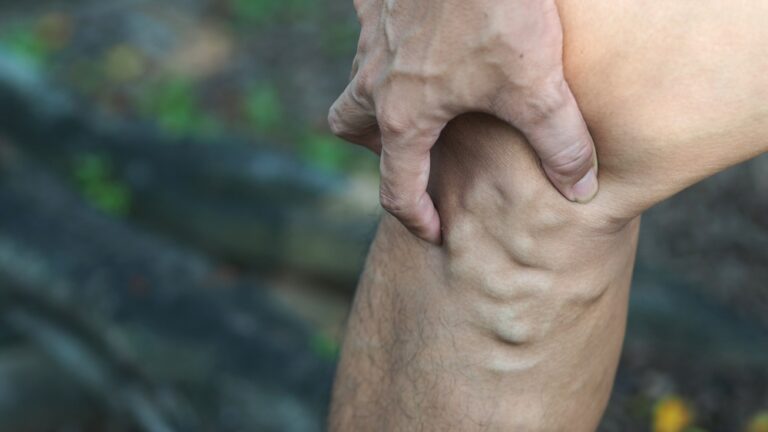
Dehydration places extra strain on already-weakened vein valves. When blood thickens, the valves that keep blood moving toward the heart have to work against more resistance. Over time, this can worsen existing varicose veins or contribute to their development.
Chronic Venous Insufficiency (CVI)
CVI occurs when vein valves fail and blood pools in the legs. Dehydration makes this worse by increasing blood viscosity and adding pressure to the venous system. People with CVI should be especially mindful of their fluid intake, as even mild dehydration can intensify symptoms like swelling, heaviness, and leg fatigue. [4]
Deep Vein Thrombosis (DVT)
DVT is one of the most serious risks. Dehydration can directly lead to increased blood viscosity, which in turn raises the risk of clot formation. A deep vein thrombosis is a blood clot that forms in the deep veins of the leg. If that clot breaks loose and travels to the lungs, it becomes a pulmonary embolism, a life-threatening emergency.
People who are older than 60, pregnant, obese, or who spend long periods sitting or lying down are already at higher DVT risk. Dehydration adds to that risk. [5]
How to Stay Hydrated and Support Vein Health
The good news? Improving your hydration is one of the simplest things you can do for your vein health. Here are practical steps to start today.
Aim for 8 to 10 Cups of Fluid Per Day
Your needs go up in hot weather, during exercise, or if you take medications that increase fluid loss. [6]
Watch the Color of Your Urine
Light yellow means you’re in good shape. Dark yellow is your body telling you it needs more water.
Don’t Wait Until You’re Thirsty
Thirst is a late signal. By the time you feel it, mild dehydration has already started.
Eat Water-Rich Foods
Cucumbers, watermelon, celery, strawberries, and oranges all count toward your daily fluid intake.
Limit Dehydrating Drinks
Alcohol and excess caffeine act as diuretics, increasing fluid loss. Create a balance by increasing your water intake.
Carry a Water Bottle
The CDC recommends keeping a water bottle with you throughout the day to make hydration a habit. [7]
Move Your Legs Regularly
If you sit or stand for long periods, take short walks to encourage blood flow and reduce pooling in the legs.
Consider Compression Socks
For those with vein concerns, compression socks can support circulation alongside proper hydration. Talk to your doctor before starting.
Ready to Take the Next Step?
Staying hydrated is a good first step, but the connection between dehydration and veins means that ongoing leg pain, heaviness, or swelling may signal an underlying vascular issue that hydration alone cannot resolve. When your circulation is compromised, staying hydrated matters, but a professional evaluation is essential to prevent long-term complications.
At Empire Vein & Vascular Specialists, our board-certified vascular surgeons focus on identifying the root cause of your symptoms, whether it is thickened blood from dehydration or failing vein valves, using comprehensive diagnostic testing and personalized treatment plans.
We are proud to be accredited by the Intersocietal Accreditation Commission (IAC), a mark of the highest diagnostic accuracy standards. We also accept most major insurance plans, including Medicare, PPOs, HMOs, and IEHP.
If your symptoms are progressing or you are concerned about your risk of blood clots, do not wait. Call 1-800-VARICOSE (1-888-263-7114) or visit our website to schedule your free vein screening and take the first step toward better circulation.
Sources
[1] https://pmc.ncbi.nlm.nih.gov/articles/PMC6723555/
[2] https://pmc.ncbi.nlm.nih.gov/articles/PMC6723555/
[3] https://www.ncbi.nlm.nih.gov/books/NBK279409/
[4] https://pmc.ncbi.nlm.nih.gov/articles/PMC8175104/
[5] https://www.ncbi.nlm.nih.gov/books/NBK507708/
[6] https://nutritionsource.hsph.harvard.edu/water/
[7] https://www.cdc.gov/healthy-weight-growth/water-healthy-drinks/index.html